
If your child plays goalkeeper, you’ve probably noticed something that every goalkeeper parent figures out eventually. Club practice doesn’t give goalkeepers enough position-specific work. The field players do most of the drilling, the goalkeeper gets a handful of shots, and the session ends. It’s not anyone’s fault. That’s just how team training is structured.
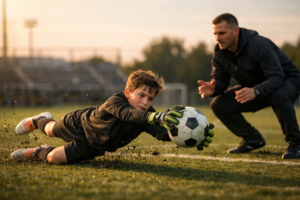
That gap is exactly why the benefits of private soccer goalkeeper training for youth players are so significant. When a young goalkeeper trains one on one with a qualified coach, the entire session is built around them. Every rep, every drill, every correction is designed for the goalkeeper position specifically.
This article explains what private training actually does for youth goalkeepers, why it works, and how parents can think about it as part of their child’s long-term development.
What Private Goalkeeper Training Actually Looks Like
Before getting into the benefits, it helps to understand what private goalkeeper training for youth actually involves. It’s not just standing in the net while a coach kicks balls at you.
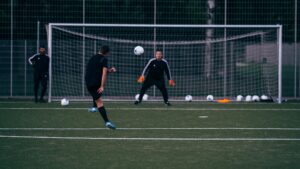
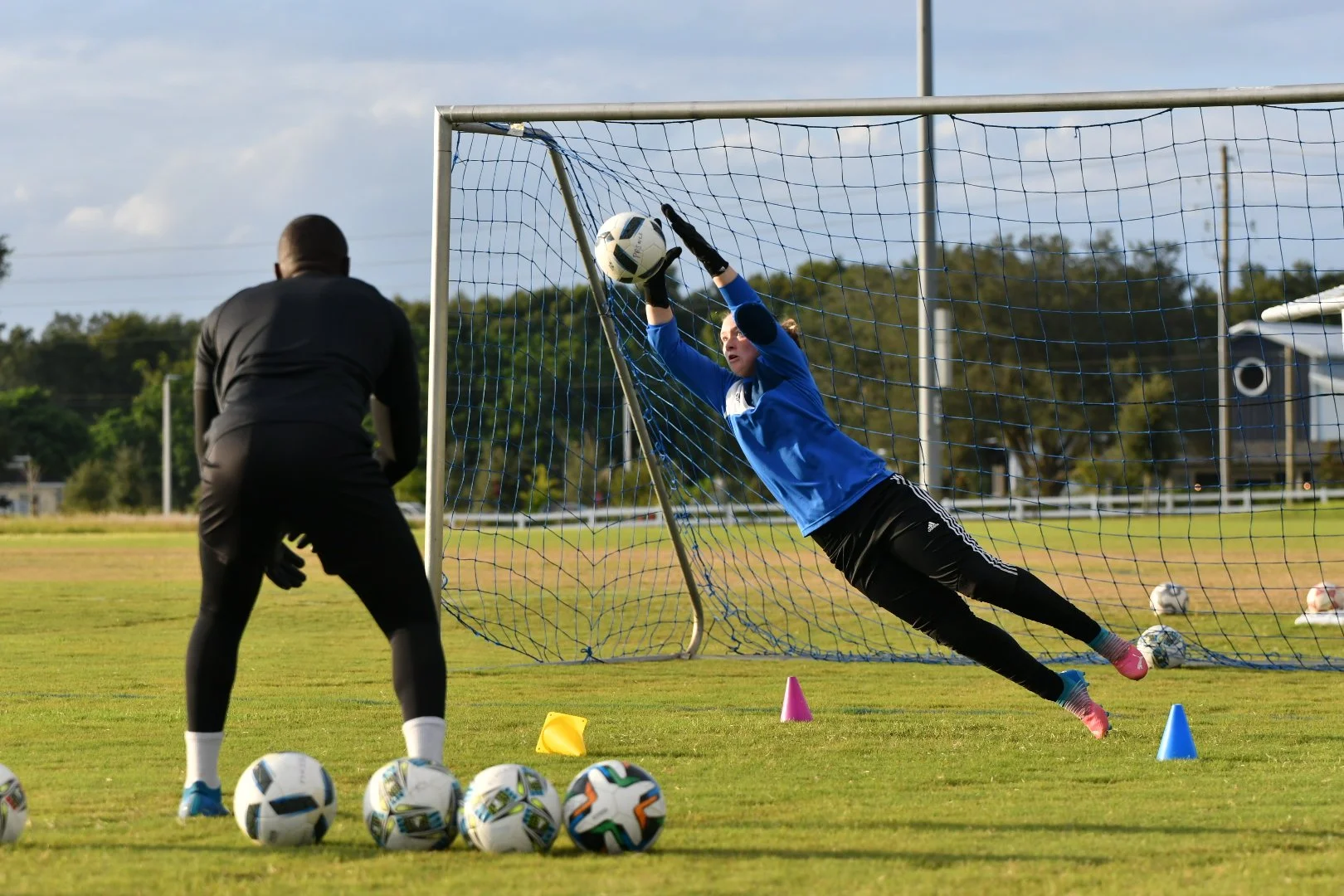
A well-structured private session covers multiple areas of goalkeeper development. A typical 60 to 90 minute session might include warm-up footwork patterns, handling and distribution work, diving and positioning technique, shot-stopping from different angles and distances, and mental focus exercises at the end.
The difference from team training is that the entire session is goalkeeper-specific from start to finish. There’s no waiting around for field players to finish their drills. Every minute counts toward goalkeeper skill development.
1. More Reps in Less Time
This is the most direct benefit of one on one goalkeeper training for youth players, and it’s hard to overstate how much it matters.
In a typical 90-minute club practice, a youth goalkeeper might make 15 to 25 meaningful saves or distribution actions. In a 60-minute private session, that number can easily reach 80 to 100 reps. That’s a four to five times increase in the number of meaningful repetitions.
Youth soccer player development is built on repetition. Skills become automatic when they’re practiced enough times at the right intensity. Private training accelerates that process simply by increasing the number of quality reps a goalkeeper gets in any given week.
2. Technique Gets Fixed Before It Becomes a Habit
Bad habits in goalkeeping are hard to break once they’re locked in. A goalkeeper who always drops their hands before making contact, or who consistently sets their feet wrong before a dive, will carry those patterns for years if nobody addresses them directly.
Goalkeeper technique training in a private setting means a coach is watching every single rep. They see the small technical mistakes that get missed in a busy team session. They can stop the drill, explain the correction, and have the goalkeeper repeat it immediately.
That immediate feedback loop is something that simply doesn’t exist in team training. When a youth goalkeeper gets a technical correction during a private session and repeats the correct movement five times right away, the brain processes it differently than a correction that gets mentioned once and then forgotten in the flow of practice.
3. Goalkeeper Confidence Building
Confidence for a goalkeeper is not just a nice-to-have. It directly affects performance. A goalkeeper who doubts themselves hesitates on crosses, second-guesses their positioning, and communicates less with their defenders. That hesitation costs goals.
One of the most meaningful benefits of private soccer goalkeeper training for youth players is what it does for their confidence. When a young goalkeeper works with a coach who is entirely focused on them, gives specific positive feedback alongside corrections, and helps them experience improvement in real time, their belief in themselves grows.
This confidence carries over into games. Youth goalkeepers who train privately tend to command their area more assertively, make faster decisions, and recover from mistakes more quickly than those who only train in team settings.
Goalkeeper mental training is often overlooked in youth development programs, but experienced private coaches build it into sessions naturally through how they frame challenges, manage pressure in drills, and talk to the goalkeeper throughout the session.
4. Reaction Time and Decision Making Improve Faster
Reaction time improvement is a trainable skill, not a fixed physical trait. The same goes for goalkeeper decision making. Both improve with targeted repetition under the right conditions.
Private sessions can isolate these skills in ways that team training cannot. A coach can run a goalkeeper through rapid-fire distribution decisions, set up scenarios where the goalkeeper has to read the play and react without time to think, or create specific situations that mirror problem areas from recent games.
This kind of targeted work is what coaches at the highest levels build their programs around. Manuel Neuer became one of the most studied goalkeepers in the world partly because of how his sweeper-keeper role demanded advanced decision making, reading play outside the box, and reacting to situations before other players had even processed what was happening. Alisson Becker’s distribution accuracy under pressure reflects years of deliberate work on decision making with the ball. These are trained skills. Private coaching helps youth goalkeepers start building them early.
5. Footwork and Physical Foundation
Goalkeeper footwork training is foundational. A goalkeeper with poor footwork gets caught off balance on shots they should save. Their positioning breaks down under pressure. Their diving mechanics suffer because the body isn’t loaded correctly before the move.
In private training, footwork is addressed as its own discipline. Coaches use ladder drills, specific movement patterns, and position-specific agility work to build the kind of explosive, controlled movement goalkeepers need. Youth soccer goalkeeper training that includes dedicated footwork work pays dividends for years because it builds the athletic foundation that everything else sits on.
Soccer goalkeeper fitness is also addressed in private training in a way that’s tailored to the position. Goalkeepers need different conditioning than field players. They need short explosive bursts, lateral quickness, upper body strength for dealing with physical challenges, and core stability for diving mechanics. Private training builds these qualities deliberately rather than as a byproduct of general team fitness sessions.
6. Faster Progress for Players Targeting High School and College
For youth goalkeepers who want to play at the high school varsity level or eventually compete for college soccer, private training is one of the clearest pathways to getting there faster.
Youth soccer performance improvement compounds over time. A goalkeeper who starts private training at age 11 and trains consistently for two years arrives at high school tryouts with significantly more developed technical skills, better decision making, and stronger physical habits than a same-age goalkeeper who only trained with their club team.
US Youth Soccer and FIFA both support position-specific development as part of a long-term athlete development model. Private coaching aligns directly with that philosophy by giving goalkeepers the kind of focused, individualized training that produces real improvement over time rather than just game-time experience.
7. The Coach Learns Your Child Specifically
One of the less obvious but genuinely valuable benefits of private soccer goalkeeper training for youth players is that a private coach gets to know the individual goalkeeper deeply over time.
They know which technical areas are strong and which still need work. They know how the player responds to pressure, what kind of feedback motivates them, and what mental patterns show up when they’re struggling. That knowledge makes every session more effective than the last.
A private goalkeeper coach for kids who works with a player across a full season or longer is not just running drills. They’re building a development roadmap tailored to that specific player, adjusting the plan as the player improves and as their game demands change.
8. Soccer Goalkeeper Drills That Match the Player’s Level
In team training, drills are designed for the group. That means some players are bored because the drill is too easy, and others are overwhelmed because it’s too hard. Neither end of that spectrum is where learning happens best.
Private coaching operates entirely in the zone where the challenge matches the player’s current ability. Soccer goalkeeper drills for kids in a private setting are chosen and modified in real time to keep the goalkeeper working at the right level of difficulty. Hard enough to require focus and effort. Not so hard that failure becomes the dominant experience.
This calibration is something only a private coach can do consistently, and it’s a significant reason why youth goalkeepers who train privately tend to develop faster than those who rely solely on team sessions.
Private vs. Team Training: They Work Together
Private soccer training for kids isn’t a replacement for team training. It’s a complement to it. Team training builds tactical awareness, communication, reading of teammates, and the ability to perform under the social pressure of a group. Those things are irreplaceable.
Private goalkeeper coaching benefits show up most clearly when layered on top of regular club training. The goalkeeper brings specific improvements from private sessions into team training and games, and brings new challenges from team situations back into private sessions to work on.
The combination is more effective than either alone. Most competitive youth goalkeepers who are serious about their development end up doing both, and the results speak for themselves.
Training Options at ELP Goalkeeping
ELP Goalkeeping offers structured goalkeeper development programs designed around the principles covered in this article. Private goalkeeper training in Connecticut provides one on one sessions tailored to each player’s technical level, positional needs, and development goals. Every session is built to make a measurable difference.
Working with a dedicated Goalkeeper Coach in Connecticut at ELP means your child works with someone who understands goalkeeper development at a deep level and tracks progress over time rather than treating each session as a standalone event.
For youth goalkeepers who benefit from a more intensive training format, Goalkeeper Camps in Connecticut offer focused multi-day programs that pack a significant amount of technical work into a short period. Camps are particularly effective during school breaks when players have more time to train.
If group training suits your child’s schedule and learning style, Group Goalkeeping Training in Connecticut provides a structured team environment with goalkeeper-specific coaching at a lower cost than private sessions. Group training is a strong complement to private work or a great entry point for newer goalkeepers.
Frequently Asked Questions
What age should kids start goalkeeper training?
Most youth goalkeepers benefit from private training starting around age 9 to 11, once they’ve developed basic coordination and have been playing goalkeeper regularly on a club team. Starting too early can be counterproductive. Before that age, general athletic development and fun team-based training typically serve players better.
Is private goalkeeper training worth it for youth players?
For players with competitive goals, yes. The increase in position-specific repetitions alone makes private training worthwhile. Add in the personalized technique correction, confidence building, and tailored drill selection, and the case for private coaching becomes clear for any goalkeeper who is serious about improving.
How often should youth goalkeepers train privately?
Once a week is a solid starting point for most youth goalkeepers, combined with regular club team training. Players targeting high school varsity spots or club team starting positions often step up to two private sessions per week. Consistency over many months matters more than short bursts of high-volume training.
Does private training help youth soccer players improve faster?
Yes. The higher volume of goalkeeper-specific repetitions, combined with immediate technical feedback and drills calibrated to the player’s exact level, accelerates development in ways that team training alone cannot match. Players who train privately consistently typically develop faster than same-age peers who rely only on club sessions.
What skills do youth goalkeepers learn in private training?
Private sessions cover shot-stopping technique, footwork and positioning, distribution with both hands and feet, diving mechanics, handling crosses and high balls, communication, reaction time, and decision making under pressure. Mental focus and goalkeeper-specific fitness are also addressed by experienced private coaches.
Can private goalkeeper training help with team selection?
Yes, directly. Goalkeepers who train privately arrive at tryouts and evaluations with more developed technique, sharper decision making, and stronger physical habits than those who haven’t. Coaches notice the difference. A goalkeeper who has clearly put in dedicated work outside of team practice stands out in a competitive selection process.
Is private training better than team training?
They serve different purposes and work best together. Team training builds tactical awareness, communication, and the ability to perform in a group context. Private training develops individual technique, confidence, and position-specific skills at a higher rep volume. The benefits of private soccer goalkeeper training for youth players are most visible when private coaching complements regular team training rather than replacing it.
Final Thoughts
The benefits of private soccer goalkeeper training for youth players are real, measurable, and show up in games. More reps, better technique, stronger confidence, faster decision making, and a coach who actually knows your child as a goalkeeper. These things add up over time in ways that make a genuine difference in how a player develops.
If your child is serious about the goalkeeper position and wants to keep improving, private coaching is one of the most direct investments you can make in their development. The work they put in now builds the foundation they’ll play from for years.