
Buying the wrong size goalkeeper gloves is one of the most common mistakes players make, and it affects everything from catching ability to how well you can punch the ball under pressure. Too loose and the glove slides on contact. Too tight and your fingers cramp up by halftime.
Knowing how to measure goalkeeper glove size correctly takes about two minutes and saves you from a lot of frustration. This guide walks you through the exact steps, explains what the numbers mean, and helps you figure out the right fit for both adults and kids.
What You Need to Measure Your Glove Size
You only need two things: a flexible measuring tape and your dominant hand. If you don’t have a measuring tape, a strip of paper and a ruler work just as well. Measure the paper against your hand, mark the length, then measure the paper with your ruler.
That’s it. No special tools, no guesswork. Just two quick measurements and you’ll have everything you need to find the right glove.
How to Measure Goalkeeper Glove Size: Step by Step
Learning how to measure goalkeeper glove size comes down to two key measurements: palm circumference and hand length. Most glove sizing is based on palm width, but hand length helps confirm the fit, especially for players with longer fingers.
Step 1: Measure Your Palm Circumference
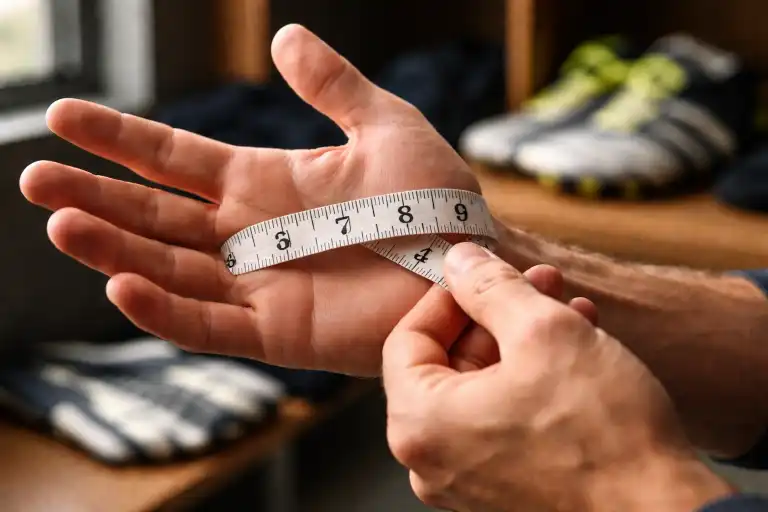
Hold your dominant hand flat with your fingers together and your thumb pointing out. Wrap the measuring tape around the widest part of your hand, just below your knuckles. Don’t include your thumb in this measurement.
Write down the number in inches. This palm circumference measurement is the primary number used to determine your glove size.
Step 2: Measure Your Hand Length
Place your hand flat on a table with your fingers together. Measure from the tip of your middle finger down to the base of your palm, where your hand meets your wrist.
This hand length measurement helps confirm sizing, particularly for goalkeepers with long fingers relative to their palm width. If your hand length is significantly longer than average for your palm measurement, you may need to size up.
Step 3: Add One to Your Measurement
Most goalkeeper glove brands recommend adding one inch to your palm measurement to get your glove size. This extra space accounts for finger protection padding and allows room for the latex grip to work properly without pulling at your skin.
So if your palm measures 7 inches around, your starting glove size would be 8. That’s the standard starting point for how to measure goalkeeper glove size across most major brands.
Goalkeeper Glove Size Chart
Here’s a general goalkeeper glove size chart based on palm circumference. Keep in mind that glove sizing varies slightly between brands, so always check the specific brand’s goalkeeper glove measurement chart before ordering.
| Glove Size | Palm Circumference | Typical Age | Player Category |
| 5 | 5 to 6 inches | 5 to 7 years | Young Youth |
| 6 | 6 to 6.5 inches | 7 to 9 years | Youth |
| 7 | 6.5 to 7 inches | 9 to 11 years | Youth |
| 8 | 7 to 7.5 inches | 11 to 13 years | Youth/Junior |
| 9 | 7.5 to 8 inches | 13 to 15 years | Junior |
| 10 | 8 to 8.5 inches | 15+ years | Adult |
| 11 | 8.5 to 9 inches | Adult | Adult |
| 12 | 9+ inches | Adult | Adult/Large |
This goalkeeper glove size chart gives you a reliable starting point. But because hand shapes differ, always try gloves on when possible or consult the specific brand’s goalkeeper glove sizing guide before purchasing online.
Youth Goalkeeper Glove Sizing
Measuring gloves for kids requires the same two steps, but the sizing ranges are smaller and change more quickly as kids grow. Youth goalkeeper glove sizing also needs to account for the fact that kids’ hands develop at different rates, so a 10-year-old could have hands anywhere from a size 6 to a size 8.
When figuring out how to size goalkeeper gloves for kids, it helps to measure their hand every few months during growth spurts. A glove that fits well in September may be too tight by March. Kids who are between sizes should generally go up rather than down, since a slightly larger glove is easier to work with than one that cuts off circulation.
Glove size by age is a helpful guide, but it’s just an estimate. Always measure the actual hand. Two kids the same age can easily be two full glove sizes apart.
How Tight Should Goalkeeper Gloves Fit?
This is one of the most misunderstood parts of goalkeeper equipment sizing. A lot of players assume gloves should fit like a second skin, but that’s not quite right.
The correct fit leaves roughly half an inch of space at the top of each finger. Your fingers should reach close to the end of the glove but not press hard against it. If your fingernails are touching the interior of the glove, the glove is too small. If your fingers have more than an inch of empty space above the fingertip, the glove is too large.
Glove fit and comfort go together. A well-fitted glove should feel snug across the palm and wrist without restricting movement. When you close your fist, the glove should close naturally with your hand, not bunch up or gap open.
Should Goalkeeper Gloves Be One Size Bigger?
This is a popular rule of thumb, and it’s mostly accurate. Adding one size to your measured palm width accounts for the thickness of the backhand padding and the glove’s overall construction. Without that extra room, the glove fits too snugly and can restrict blood flow and movement.
However, some newer glove models are designed with a negative cut or roll finger cut, which fits closer to the hand by design. For those styles, some goalkeepers prefer to stay at their true measured size. Glove finger length and cut type both affect how the sizing formula works in practice.
When in doubt, go one size up from your palm measurement. That’s the standard approach most brands build around.
How Glove Sizes Differ by Brand
This is where things get a little less straightforward. Different glove brands use slightly different sizing standards, which means a size 9 from one brand might feel like a size 10 from another.
Adidas goalkeeper gloves tend to run slightly narrow. If you have a wider palm, you might find Adidas gloves feel tighter than expected for your size.
Nike goalkeeper gloves are generally considered true to size, with a slightly roomier feel across the palm.
Uhlsport and Reusch are both known for more detailed sizing options, including half sizes and specific cut variations like flat palm, roll finger, and negative cut. These brands are popular with serious and elite-level goalkeepers who want a very specific fit profile.
When using a goalkeeper glove size calculator or online sizing tool, always make sure you’re using the specific brand’s chart, not a generic one. Soccer goalie glove sizing is close but not identical across manufacturers.
What Size Gloves Do Professional Goalkeepers Wear?
Professional goalkeepers typically wear sizes 10 to 11, though this depends entirely on hand size. Manuel Neuer, widely regarded as one of the best technical goalkeepers in the world, is known to wear a size 10. Alisson Becker, who plays at Liverpool and for Brazil’s national team, also works in that range.
In Major League Soccer, goalkeepers range across similar sizes depending on their individual build. FIFA does not regulate glove size in its rules, so players can choose whatever fits best for their hand and preferred cut style. Manchester United and other elite clubs work directly with brands like Adidas and Nike to create custom glove options for their goalkeepers.
The key takeaway is that there’s no single right size for elite goalkeepers. The right size is the one that fits your specific hand correctly.
Can Glove Size Affect Performance?
Yes, significantly. Glove fit performance is directly tied to how well a goalkeeper can control the ball on catches, distribution, and shot-stopping.
A glove that’s too large shifts on the hand during contact, which reduces feel and control. A glove that’s too tight restricts finger movement and makes it harder to spread the hand wide for high balls or diving saves.
Goalkeeper glove size tips from coaches often focus on this exact issue because poorly fitted gloves are one of the easiest problems to fix and one of the most commonly overlooked. Getting the right fit is one of the simplest performance improvements a goalkeeper can make, and it costs nothing extra if you know your size before you buy.
Goalkeeper Glove Fitting Guide: Common Mistakes to Avoid
Even with good measurements, glove fitting goes wrong in a few predictable ways. Here’s what to watch out for.
- Measuring with the thumb included: Always exclude the thumb when measuring palm circumference. Including it inflates the number and leads to an oversized glove.
- Using a generic size chart for a specific brand: Each brand’s goalkeeper glove fitting guide is slightly different. Always check brand-specific sizing.
- Buying based on age alone: Glove size by age is a rough estimate only. Always measure the actual hand for the most accurate fit.
- Ignoring cut style: A negative cut glove fits smaller than a flat palm glove at the same listed size. Cut style affects how the size translates to real-world fit.
- Not accounting for growth in youth players: Kids grow fast. A glove that fits perfectly in the fall may not fit in the spring. Check sizing at the start of each season.
Training With the Right Gloves at ELP Goalkeeping
Getting your gloves sized correctly is a good first step, but developing as a goalkeeper takes consistent, focused training. Private goalkeeper training in Connecticut at ELP Goalkeeping gives players structured one on one sessions built around the technical details that separate good goalkeepers from great ones. Equipment fit is part of that picture, and coaches who work with you regularly notice when something feels off.
Working with a Goalkeeper Coach in Connecticut over time means your training is tracked, adjusted, and built on a long-term plan. The right coach helps you develop the hand strength, footwork, and positioning that make properly fitted gloves actually matter.
If you want an intensive block of goalkeeper-specific training, Goalkeeper Camps in Connecticut offer a focused environment where players work on the technical side of the position with coaches who understand what elite development looks like at every level.
For ongoing development alongside other serious goalkeepers, Group Goalkeeping Training in Connecticut keeps the reps high and the coaching quality consistent, at a rate that works for most families.
Frequently Asked Questions
What is the correct way to measure goalkeeper glove size?
Wrap a flexible measuring tape around the widest part of your palm, just below the knuckles, excluding the thumb. Note the measurement in inches. Add one inch to that number to get your starting glove size. For example, a 7-inch palm measurement typically corresponds to a size 8 glove.
How tight should goalkeeper gloves fit?
Goalkeeper gloves should feel snug across the palm and wrist without restricting movement. Your fingertips should come close to the end of the glove fingers but leave roughly half an inch of space. If your nails press against the interior, the glove is too small.
Should goalkeeper gloves be one size bigger?
Generally yes. Adding one size to your measured palm circumference accounts for padding thickness and allows the latex grip to function correctly. However, negative cut and roll finger gloves sometimes fit closer to hand size, so check the specific model before sizing up.
How do I know if my gloves are too small?
Signs that your gloves are too small include fingertips pressing against the interior, restricted finger movement, discomfort when spreading your hand wide, and the glove pulling tight across the palm when you close your fist. Any of these mean you need to go up a size.
How do I measure goalkeeper glove size for kids?
Use the same palm circumference method as adults. Measure the widest part of the child’s palm below the knuckles, excluding the thumb, then add one inch. Because kids grow quickly, recheck sizing every few months. When between sizes, size up.
Do goalkeeper glove sizes differ by brand?
Yes. Adidas tends to run narrower, Nike is generally true to size, and brands like Uhlsport and Reusch offer more detailed sizing options including half sizes and multiple cut variations. Always use the specific brand’s goalkeeper glove sizing guide rather than a generic chart.
What size gloves do professional goalkeepers wear?
Most professional goalkeepers wear sizes 10 to 11, but this varies by hand size. Manuel Neuer and Alisson Becker both work around a size 10. There is no standard size for professionals. The right size is always the one that fits the individual goalkeeper’s hand correctly.
Can glove size affect performance?
Yes. A glove that is too large shifts on contact and reduces feel. A glove that is too small restricts finger movement and makes spreading the hand difficult. Getting the right size is one of the most straightforward improvements a goalkeeper can make to their equipment setup.
Final Thoughts
Knowing how to measure goalkeeper glove size correctly takes about two minutes and makes a noticeable difference in how a glove performs. Measure your palm, add one inch, check the brand-specific goalkeeper glove sizing guide, and account for cut style. That’s the whole process.
For youth players, stay on top of sizing as they grow. For adults switching brands, always remeasure rather than assuming your size carries over. And if you’re ever unsure, most goalkeeper coaches can help you identify the right fit based on what they observe during training.
The gloves are just one piece of goalkeeper development. The other piece is getting the right coaching and repetitions to actually use them well.