If you want to improve as a soccer goalkeeper, learning proper goalkeeper diving is one of the biggest steps you can take. It is not just about throwing yourself at the ball. It is about control, timing, and confidence. A good dive can turn a tough shot into a simple save, but only if you understand the basics and practise the right way.
Simple goalkeeper diving drills to build confidence
- Drill 1 (From the floor) – Start on your side and trap the ball with proper hand shape to learn safe landing and basic dive form
- Drill 2 (From the knees) – Dive from your knees to catch mid-height balls with both hands and control your landing
- Drill 3 (Soft landing from feet) – Step into the dive from standing and land on a soft surface to build power and confidence
- Drill 4 (Full dive in goal) – Combine everything with real low and mid-height saves from standing, using correct technique on both sides
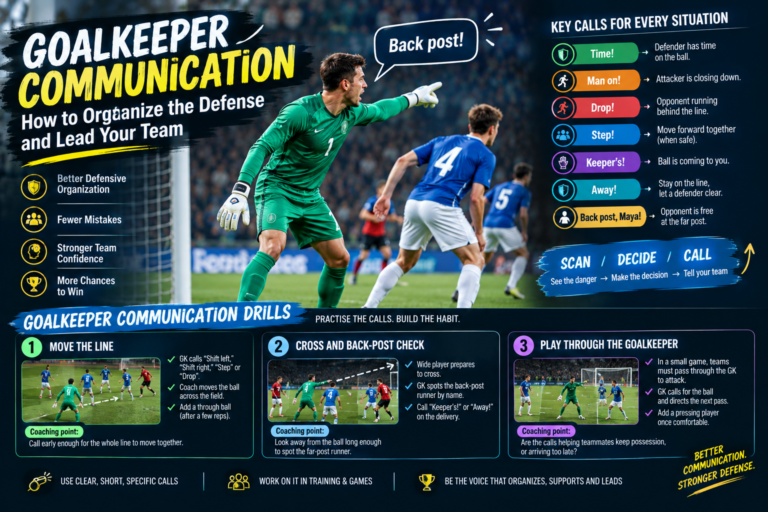
Let’s discuss them in detail and know more about techniques and drills.
Start with the right position before you dive
Before you even think about how to dive in football goalkeeper, your starting position matters. You should stay balanced, slightly bent, and ready to move. Your feet should not be flat. Stay light so you can react quickly.
A lot of beginners miss this part. They focus only on the dive and forget positioning. But if you are not in the right spot, even the best dive technique will not help much. The goal is to be the closest to the ball as early as possible.
Understanding the basic dive technique
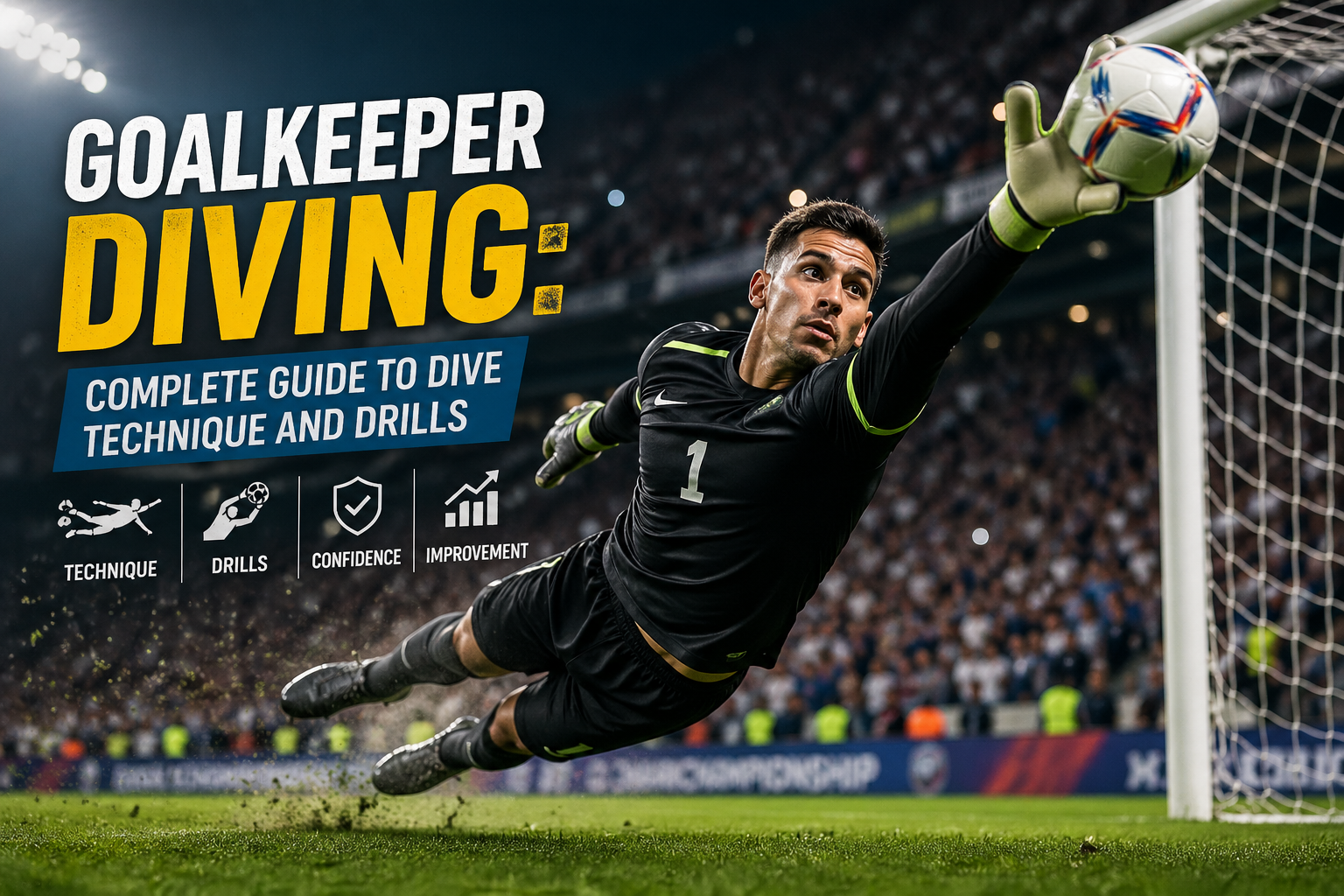
Good soccer goalkeeper diving starts with a simple movement. Take a small step towards the ball, then push off strongly with your leg. Your body should move forward and slightly down, not just sideways.
The most important part is getting your hands to the ball first. Your eyes follow the ball, your hands attack it, and your body supports the movement. A clean diving save should feel controlled, not rushed.
Ground dives and when to use them
The ground dive is one of the most common saves. It is used when the ball is low and moving quickly across the ground.
In this type of goalkeeper diving, you stay low, push off your leg, and reach out quickly. You do not need height here, just speed and control.
During your training sessions, practising ground dives helps improve reaction time and builds confidence. It is usually the first step before learning more advanced dives.
Aerial dives for higher shots
When the ball is heading higher, you need an aerial dive. This is where power comes in. You push off strongly and lift your body into the air to reach the ball.
Your arms should move with your body, helping you get more height. Again, focus on getting your hands to the ball early.
Aerial dives take more practice, but they are important for stopping shots aimed at the corners.
Learn to land properly and stay safe
One thing many players ignore is landing. Good goalkeeper diving is not just about reaching the ball; it is also about landing safely.
Try to land on your side, around your hip and shoulder. Avoid landing on your hands or wrists. This reduces the risk of injury and helps you recover faster for the next move.
At first, it may feel uncomfortable. That is normal. Over time, you will start to feel comfortable with the movement.
Goalkeeper diving drills that actually work
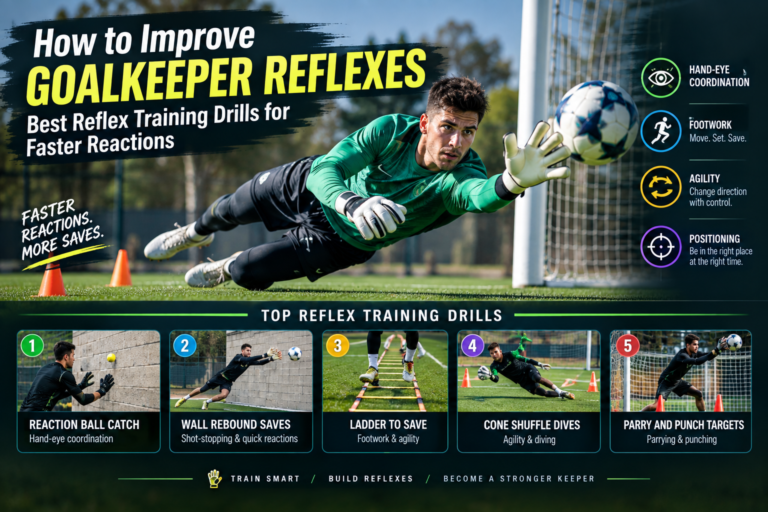
The best way to improve is through simple goalkeeper diving drills that build skill step by step.
Start with low drills. Practice diving from a kneeling position to get used to the motion. Then move to standing drills where you push off and dive to each side.
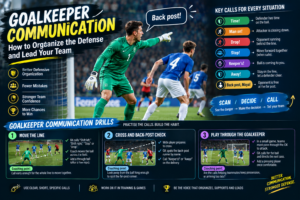
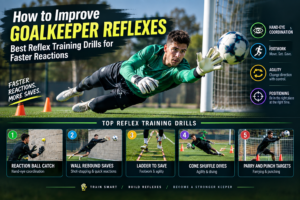
You can also use reaction drills. Have someone call out directions or roll the ball randomly. This helps improve timing and movement.
Consistent training sessions are what make the difference. Repetition builds muscle memory and confidence.
When to dive and when to stay on your feet
This is something many guides do not explain well. Diving is important, but it is not always the right choice.
If the ball is close to you, staying on your feet can be better. Diving too early can leave space open.
Try to read the situation. Watch the player’s body shape and shot direction. Good goalkeepers do not just react; they anticipate.
Common mistakes to avoid
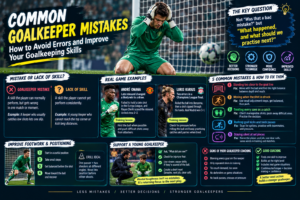
A lot of beginners make similar mistakes. They dive too early or too late. Some push sideways instead of forward. Others reach weakly instead of attacking the ball.
Another issue is hesitation. Players think too much and freeze. That is why regular soccer goalkeeper diving practice is important. It removes doubt and builds confidence.
Build confidence through repetition
Diving can feel intimidating at first. That is normal, especially for new players. But the more you practise, the easier it gets.
Start simple, repeat your footwork drills and diving drills, and build step by step. Over time, you will stop thinking about the movement and just react naturally.
How Enzo Pereira can improve your diving technique
When it comes to goalkeeper diving, having the right guidance makes a big difference. Training with Enzo Pereira helps you fix small mistakes that most players do not even notice.
He works on your dive technique, body positioning, and timing, so you are not just diving, you are diving with control. You also get proper goalkeeper diving drills that match real game situations, not just basic practice.
This helps you feel more comfortable, react faster, and make better diving saves during matches. Over time, your confidence builds, and diving starts to feel natural instead of forced.
Final thoughts
Improving your goalkeeper diving is not about learning something complicated. It is about getting the basics right and practising them consistently.
If you focus on your position, learn the correct dive technique, and stay regular with your goalkeeper diving drills, you will see steady progress.
In the end, a confident soccer goalkeeper is not the one who dives the most. It is the one who knows when and how to dive at the right moment.