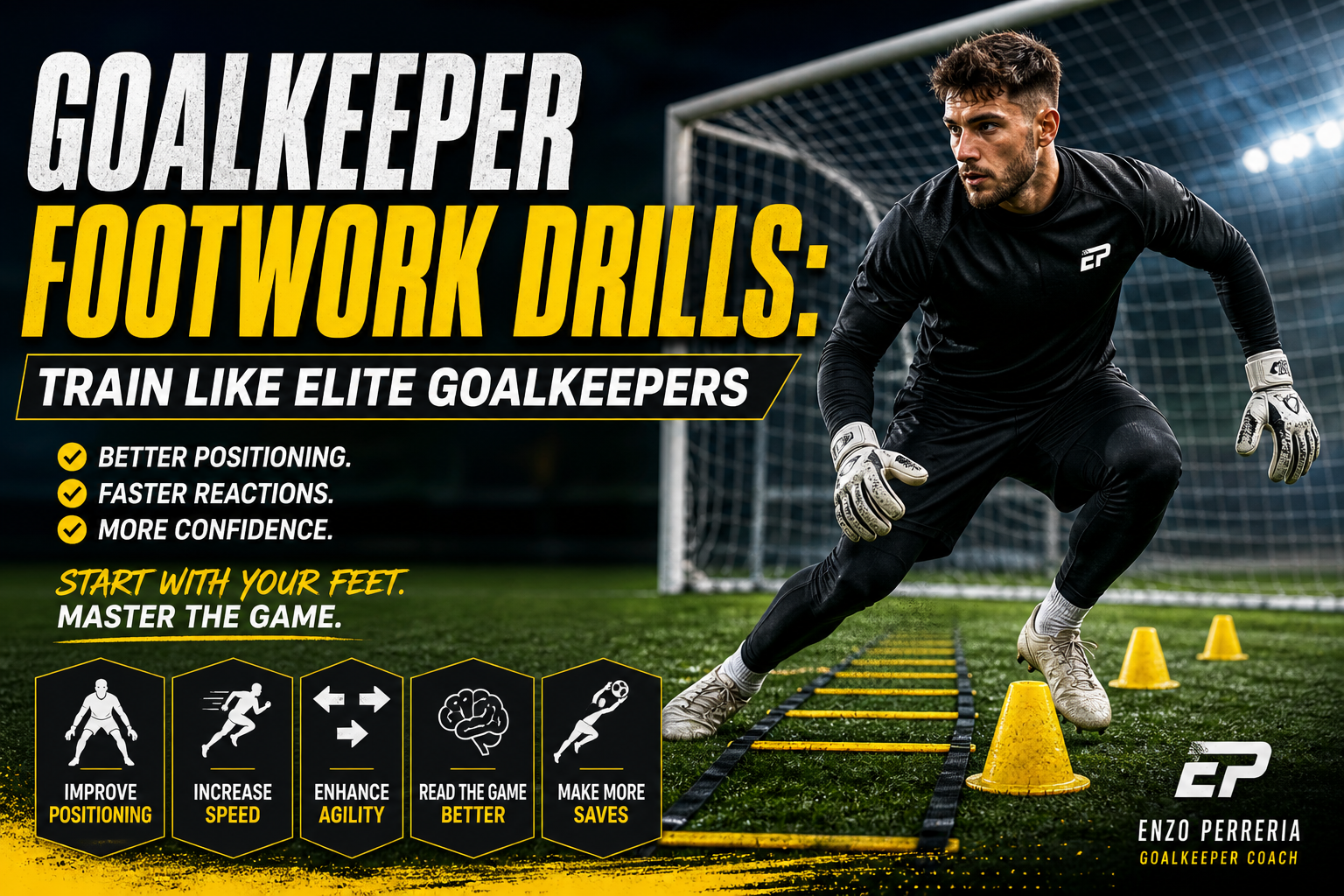
If you want to improve as a keeper, start with your feet. A lot of players focus on diving and shot stopping, but real progress comes from goalkeeper footwork. It controls your positioning, balance, and how quickly you react. Without it, even simple saves become difficult.
That is why top elite goalkeepers spend so much time on gk training drills focused on movement. It is not flashy, but it makes the biggest difference in real matches.
Why footwork matters more than you think
Good footwork is what puts you in the right place before the shot even happens. If your feet are slow, your reactions will always be late.
It helps with balance, so you do not fall or lose control when moving. It improves speed, especially when shifting across the goal. And most importantly, it helps you read the game better because you are always in the right position to react.
If you watch top keepers, they are not guessing. Their movement is controlled, small, and quick. That comes from repetition.
Get your set position right first
Before jumping into footwork drills for goalkeepers, you need to fix your base.
Your set position should feel natural. Stay light on your feet, knees slightly bent, and weight forward. Avoid standing flat. That slows you down.
This small detail changes everything. If your starting position is wrong, even the best drills will not help much.
Basic goalkeeper footwork you should master
The goal is not just to move fast. It is to move correctly.
Use short steps when shifting side to side. This keeps you balanced and ready to react. Try to shuffle instead of crossing your feet. Crossing can throw you off balance.
When moving forward or backward, use controlled steps. Do not rush blindly. Stay balanced so you can adjust quickly.
These basics are simple, but they are what separate average keepers from better ones.
Simple gk training drills that actually work
Now let’s get into practical goalkeeper techniques drills you can start using.
Side shuffling is one of the best starting drills. Move between two points while staying low and balanced. This improves lateral movement.
Forward and backward sprints help with quick recovery. Move forward, then back quickly while staying controlled. This is useful during rebounds or second shots.
Cone weaving helps improve precision. Move through cones using short steps. Focus on control, not just speed.
Lateral bounds improve power. Push off one foot and move side to side. This helps you cover more space quickly.
These are simple footwork drills for goalkeepers, but they build the foundation you need.
Advanced footwork drills for elite goalkeepers
Once you are comfortable, you can step things up.
The T-drill combines forward, sideways, and backward movement. It forces you to change direction quickly.
Triangle drills improve reaction and movement under pressure. You are constantly adjusting your position.
Backpedal drills help when you need to retreat quickly towards the goal line.
These advanced goalkeeper footwork drills help you move more like elite goalkeepers.
Using agility ladders the right way
Agility ladders are great for improving quick feet. But they only work if you use them properly.
Focus on speed and control. Keep your steps light and precise. Do not rush through them without control.
Basic patterns like two feet in each square or side shuffles are enough to improve coordination. Over time, your foot speed will improve naturally.
How to use footwork drills in training sessions
This is something many players get wrong. They do drills, but they do not use them properly in training.
Start your training sessions with light footwork drills as a warm-up. This prepares your body and sharpens your movement.
Then include them in your goalkeeper training. For example, do a footwork movement before making a save. This makes it game realistic.
You can also add them into conditioning work. This helps you stay sharp even when tired.
Ending with light drills also helps reinforce technique.
What most players get wrong
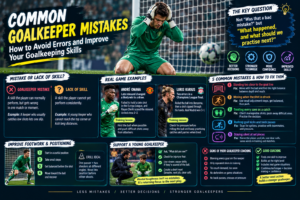
Many players focus too much on speed. They rush through drills without control. That does not help.
Another mistake is ignoring positioning. Good footwork is not just movement, it is about being in the right place at the right time.
Some players also avoid using both sides. This creates a weak side, which becomes a problem in matches.
Keep it simple. Focus on control first, then speed.
What elite goalkeepers do differently
Top players like De Gea or Alisson do not just train randomly. They repeat the basics again and again.
They focus on balance, quick steps, and reading the game. Their goalkeeper training includes a mix of drills, reaction work, and real match scenarios.
That is what makes them consistent. Not just talent, but smart training.
How Enzo Pereira can help your goalkeeping
If you are serious about improving, working with someone like Enzo Pereira can make a real difference. Instead of just doing random drills, you get structured goalkeeper training that focuses on your weak areas, especially goalkeeper footwork and positioning.
He helps you understand not just how to move, but when to move. That means better reactions, better decisions, and more control during real games. His sessions are usually built around practical gk training drills, so you are not just practising, you are actually improving in a way that shows on the pitch.
Over time, this kind of guidance helps you feel more confident, more balanced, and closer to how elite goalkeepers train and perform.
Final thoughts
Improving your goalkeeper footwork is not complicated. It just takes consistent effort.
Start with your set position, learn the basics, and build up with the right footwork drills for goalkeepers.
Over time, you will notice the difference. You will move quicker, react faster, and feel more confident in goal.
That is when your game really starts to level up.