There’s a moment every goalkeeper experiences—the first real action of the game. A shot, a cross, a split-second decision. And in that moment, you either feel ready… or you don’t.
The difference is rarely luck. It’s preparation.
At ELP Goalkeeping, this shows up immediately. The goalkeepers who step in with confidence aren’t warming into the match—they’ve already arrived through a structured goalkeeper warm up routine that prepares them for the intensity ahead and sets the tone for a complete pre game goalkeeper warm up
A complete warm-up routine isn’t about casually moving around before kickoff. It’s about building sharpness, unlocking movement, and making sure your reactions are already switched on before anything is at stake.
Switch the Body On, Not Just Loosen It Up
Too many goalkeepers treat the start of their warm-up like a formality. It shouldn’t be.
A proper soccer goalkeeper warm up routine begins every goalkeeper pre game warm up with dynamic movement that actively prepares the body:
- High knees to engage the lower body
- Butt kicks to activate the hamstrings
- Leg swings to open up the hips
- Arm rotations to loosen the upper body
These foundational goalkeeper mobility exercises do more than increase blood flow—they prepare your body to move explosively and efficiently.
This foundation becomes even stronger over time, especially when it’s repeated in structured environments like goalkeeping camp training, where these movements stop feeling like drills and start becoming instinct.
Where Games Are Won Early: Footwork and First Steps
Before diving saves and big moments, there’s something quieter that matters more—your movement.
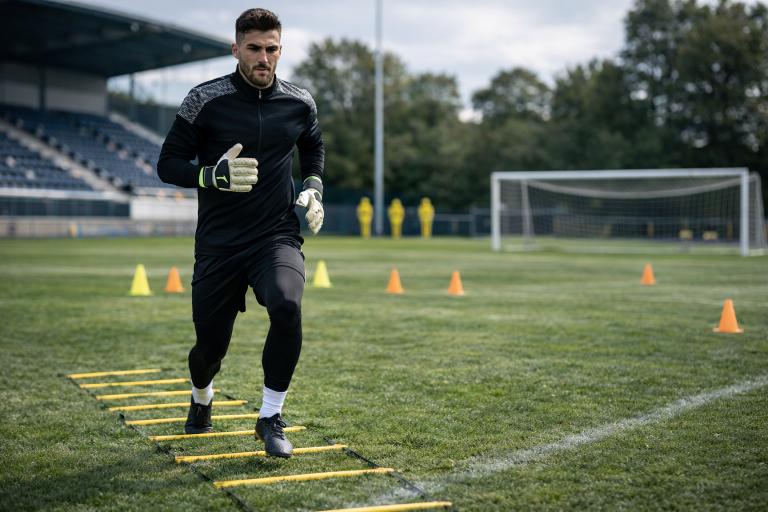
Your goalkeeper footwork warm up is where positioning begins:
- Ladder drills to build quick, precise steps
- Cone shuffles to improve lateral movement
- Forward and backward transitions to simulate real play
These goalkeeper agility drills allow you to arrive in the right place before the shot even happens.
This is also where many players start to truly understand how to be a good goalkeeper in football, because positioning and timing are built through these exact patterns.
Range, Reach, and Readiness: Unlocking Full Mobility
Goalkeeping is unpredictable. You’re constantly reacting to awkward angles, stretched positions, and sudden changes.
That’s why your goalkeeper stretching routine plays a key role in any effective pre-game warm-up. Focus on opening your hips, improving your reach, and allowing your body to move freely without restriction.
These goalkeeper flexibility exercises give you confidence in your movement so you can react instinctively instead of hesitating.
Staying Durable: The Warm-Up That Keeps You Playing
One part of a goalkeeper warm up routine that often gets overlooked is durability. It’s not just about preparing for this game—it’s about staying available for every game.
Goalkeepers put their bodies through repeated impact: diving, landing, stretching, and recovering. Without the right preparation, small tightness turns into bigger problems over time. That’s why your warm-up should also protect you. Including controlled landing mechanics, light activation work, and consistent goalkeeper mobility exercises helps reduce strain on joints and muscles. Over time, this builds resilience.
The best goalkeepers aren’t just sharp, they’re reliable. And reliability starts with a warm-up that prepares your body to handle more than just the next 90 minutes.
Turning Movement into Action: Where Reactions Take Over
Once your body is ready, your warm-up should start to feel like the game itself.
Start simple and controlled, focusing on clean handling and positioning before increasing intensity. Then begin by introducing real match-like situations:
- Close-range reaction saves
- Deflection handling
- Second-save scenarios
These soccer goalie warm up drills are a key part of any warm-up routine, and these goalkeeper warm up drills help bridge the gap between preparation and real performance. This is where the benefits of private soccer goalkeeper training become clear, as small adjustments in positioning and timing make a noticeable difference under pressure. These moments are also where your confidence starts to build. The more consistently you execute these goalkeeper warm up drills, the more natural your reactions feel under pressure. Instead of reacting late or second-guessing decisions, your body begins to trust the work you’ve already put in. That trust is what allows goalkeepers to play freely, without hesitation, even in high-pressure situations.
The Part Nobody Sees: Getting Mentally Locked In
Physical preparation is obvious. Mental preparation isn’t—but it matters just as much.
Before kickoff, a goalkeeper needs to slow things down internally. Controlled breathing helps settle nerves, visualization prepares you for key moments, and awareness of positioning sharpens your focus.
This part of your goalkeeper warm up drills helps you stay calm when the game becomes unpredictable. Training in more competitive environments, including youth soccer goalkeeper drills and advanced sessions like group goalkeeper training Connecticut, also sharpens this mental side through real-game pressure.
Same Work, Different Results: Why Structure Changes Everything
You’ll often see goalkeepers putting in the same effort but getting completely different results. The difference isn’t effort—it’s structure.
A well-built goalkeeper warm up routine connects every part of preparation to performance. Every movement has a purpose, and every drill builds toward something specific.
This becomes even more effective when guided through private goalkeeper training Connecticut, where preparation is tailored to match real-game demands. Over time, this structured approach compounds. Small improvements in footwork, positioning, and reaction timing begin to stack, creating noticeable progress across games. What once felt difficult starts to feel controlled. That’s when your goalkeeper warm up routine stops being preparation alone and becomes part of your overall development as a goalkeeper.
The Edge That Shows Up When It Matters Most
A well-executed goalkeeper warm up routine built on the right goalkeeper warm up drills is what separates an average pre match goalkeeper warm up from one that truly prepares you to perform.
When your body is activated, your movement is sharp, and your reactions are ready, you don’t need time to adjust.
At ELP Goalkeeping, that difference is clear. Goalkeepers who prepare with purpose don’t ease into the game; they step into it ready.
Frequently Asked Questions
What is the best goalkeeper warm up routine before a game?
The best routine includes dynamic movement, footwork drills, mobility work, and reaction-based goalkeeper warm up drills. It should gradually build intensity so your body and reactions are fully ready before kickoff.
How long should a goalkeeper warm up before a match?
A proper goalkeeper pre game warm up usually lasts between 20–30 minutes. This allows enough time to activate the body, sharpen reactions, and reach match intensity without causing fatigue.
What mobility exercises should goalkeepers include in their warm-up?
Goalkeepers should focus on hip openers, hamstring activation, groin stretches, and ankle mobility. These exercises improve movement range and help reduce the risk of injury during explosive actions.
Can youth goalkeepers follow the same warm-up routine?
Yes, but the intensity and complexity should be adjusted. Youth soccer goalkeeper drills should focus more on coordination, control, and building proper movement habits.
What equipment is needed for goalkeeper warm up drills?
Most goalkeeper warm up drills require simple equipment like cones, a ladder, a ball, and a partner or coach. Even with minimal setup, an effective warm-up can still be performed.