Goalkeeper positioning is about standing in the right place before the shot, cross, corner, or free kick happens. Strong soccer goalkeeper positioning helps keepers cut the angle, protect the goal, and make saves easier instead of relying only on reflexes.
This guide covers goalkeeper positioning tips, match situations, and practical goalkeeper positioning drills for young players and experienced goalkeepers who want to improve.
What Is Goalkeeper Positioning?
Goalkeeper positioning means placing your body in the best spot based on the ball, goal, attacker, defenders, and match situation.
A young goalkeeper may think positioning means standing in the middle of the goal. But real positioning is more detailed. You must adjust when the ball moves wide, when a striker enters the box, when a cross comes in, or when your team gives away a free kick.
For experienced players, positioning is also about reading the striker’s body shape, first touch, shooting foot, and pressure from defenders.
A good goalkeeper should usually be:
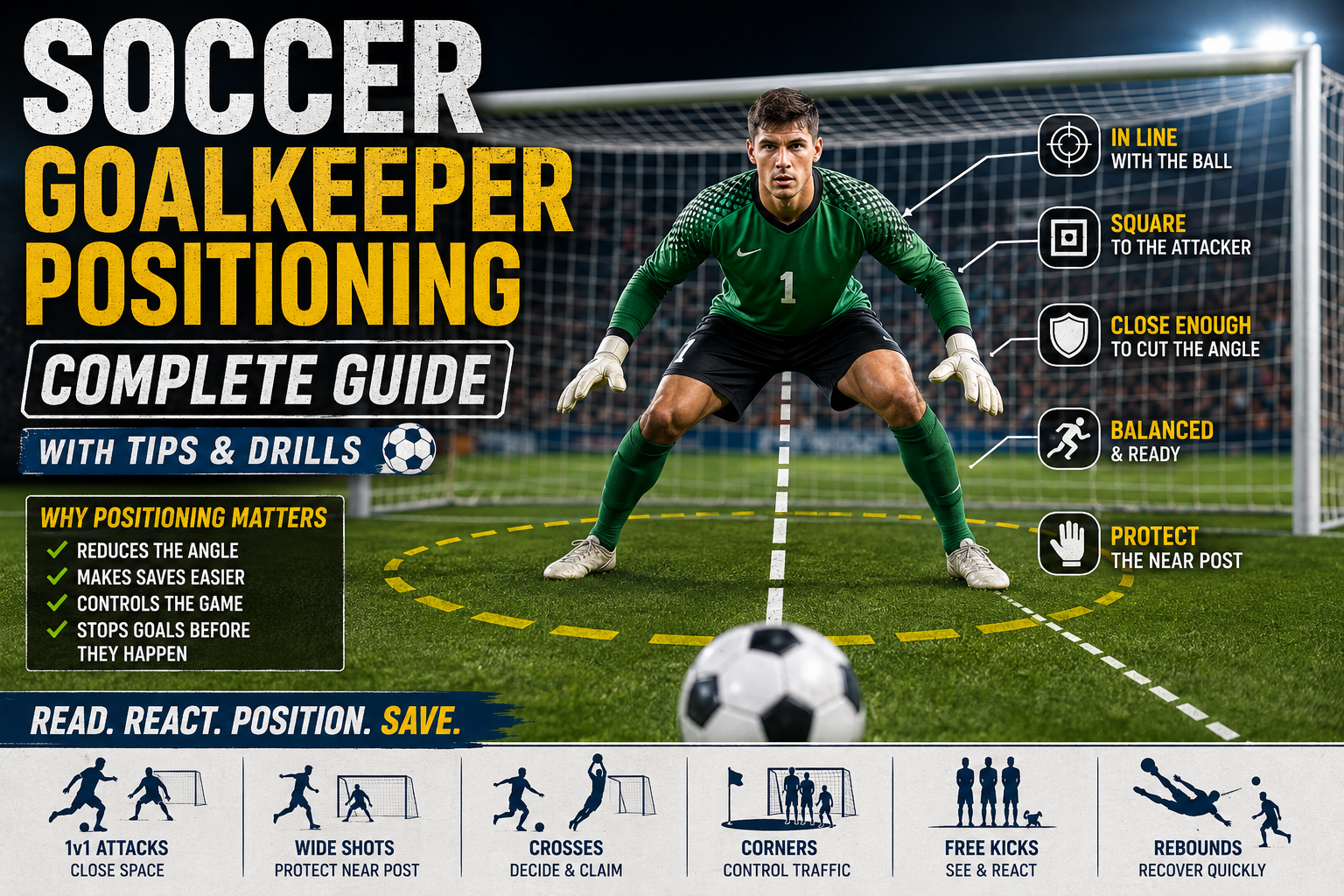
- In line with the ball
- Square to the attacker
- Balanced before the shot
- Ready to move forward or sideways
- Close enough to reduce the angle
- Deep enough to avoid being chipped
Why Soccer Goalkeeper Positioning Matters
Strong soccer goalkeeper positioning can stop goals before the shot is even taken. When you stand in the right place, the attacker has less space to aim at.
If you stand too deep, the goal looks bigger. If you rush too far out, the striker can chip you or pass around you. If you stand too close to one post, the other side opens up.
Good positioning helps with:
| Game Situation | What Good Positioning Does |
| 1v1 attacks | Closes space without rushing |
| Wide shots | Protects the near post |
| Crosses | Helps you catch, punch, or stay |
| Corners | Gives better control in traffic |
| Free kicks | Helps you set the wall and see the ball |
| Rebounds | Let’s you recover for the second save |
How to Position Yourself as a Goalkeeper
If you want to learn how to position yourself as a goalkeeper, start with the ball line.
Imagine a line from the ball to the centre of your goal. Your body should stay connected to that line. When the ball moves left, you move left. When the ball moves right, you move right.
But do not move wildly. Use small steps. Stay light on your feet. Your body should be set before the shot happens.
Your ready shape should be simple:
- Feet shoulder-width apart
- Knees slightly bent
- Hands in front
- Chest facing the ball
- Weight forward
- Head still
Young keepers should focus on balance and timing. Experienced keepers should focus on small adjustments, reading pressure, and choosing the right depth.
Goalkeeper Positioning Tips for Shots
These goalkeeper positioning tips are useful in real match situations.
Protect the Near Post
The near post is the side closest to the ball. At tight angles, this must be protected first. If a player scores at the near post, the keeper is often too central, too deep, or slow to adjust.
Do not hug the post. Stand at an angle where you can cover the near side but still react to a shot across the goal.
Cut the Angle
When the striker is close enough to shoot, step slightly forward to make the goal smaller. But do not rush without reading the situation.
If the striker has a heavy touch, you can close faster. If the ball is close to their feet, hold your ground and stay balanced.
Get Set Before the Shot
Many keepers concede because they are still moving when the ball is struck. You must move early, then set.
A set goalkeeper can push, dive, catch, or block. A moving goalkeeper reacts late.
Goalkeeper Positioning for Crosses
Goalkeeper positioning for crosses is about decision-making. When the ball goes wide, you must quickly decide whether to come, stay, catch, or punch.
If the ball is wide and deep, start slightly off your line so you can attack a floated cross. If the ball is near the byline, protect the near post and prepare for a cut-back.
The biggest mistake is getting stuck in no man’s land. That means you are too far from the goal to save and too far from the ball to claim it.
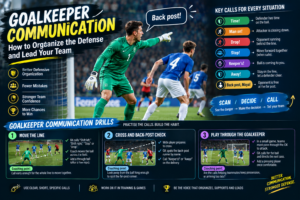
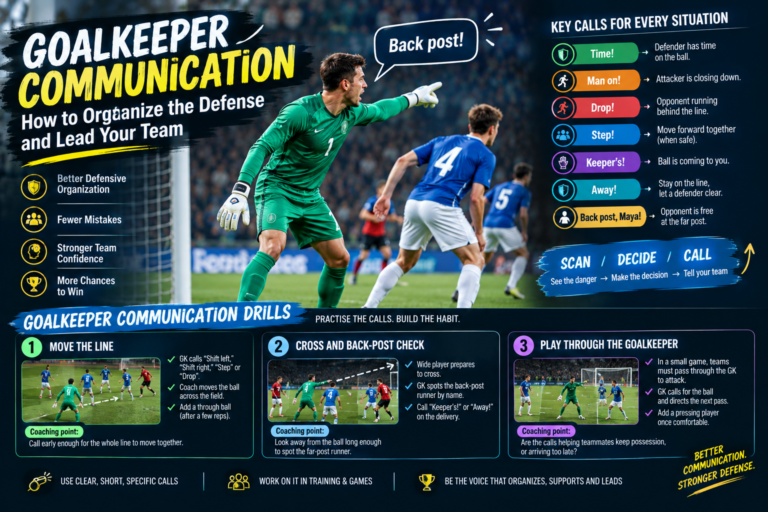
For young goalkeepers, the key is communication. Shout “Keeper!” if you are coming. Shout “Away!” if defenders need to clear it.
For experienced goalkeepers, read the type of delivery. Is it driven low? Floated to the back post? Curled into the six-yard box? Your starting position should change with the cross.
Goalkeeper Positioning for Corners
Goalkeeper positioning for corners depends on the delivery.
For an inswinging corner, the ball bends toward goal. Start slightly safer because it can drop under the crossbar or into a crowded six-yard box.
For an outswinging corner, the ball moves away from goal. You can often start a little higher and be ready to attack the ball.
Before every corner:
- Check your posts
- Look for blockers
- Organise defenders
- Watch the kicker’s body shape
- Start where you can see the ball
- Be ready for the second ball
Corners are not only about catching. Sometimes the best decision is to punch with distance, stay on the line, or prepare for a rebound.
Goalkeeper Positioning Free Kick Guide
Goalkeeper positioning free kick situation needs calm thinking.
First, set the wall. The wall usually covers one side of the goal, while the goalkeeper covers the other. Then make sure you can see the ball. If you are hidden behind your own wall, you will react late.
Do not move before the ball is struck. Good free-kick takers watch the goalkeeper. If you lean early, they may shoot the other way.
Young keepers should learn to trust the wall. Experienced keepers should adjust based on the kicker’s foot, distance, and shooting angle.
Best Goalkeeper Positioning Drills
These goalkeeper positioning drills can help both beginners and advanced players.
Drill 1: Ball Line Angle Drill
Place three balls outside the box: left, centre, and right. The goalkeeper starts on the line. The coach points to one ball, and the keeper moves into position.
The focus is to stay connected to the ball line, square the body, and set before the shot.
Drill 2: Near Post Drill
A server starts wide inside the box. The keeper begins central. The server can shoot near post, shoot across goal, or pass across the box.
This drill teaches the keeper to protect the near post without giving up the far side.
Drill 3: 1v1 Trigger Drill
An attacker dribbles toward goal. The goalkeeper must decide when to hold, when to step forward, and when to block.
The key is reading the attacker’s touch. Heavy touch means close down. Close control means stay patient.
Drill 4: Cross Decision Drill
A server crosses from wide areas. Add attackers and defenders if possible. The keeper must decide whether to catch, punch, or stay.
This improves how goalkeepers handle crosses and helps them avoid no man’s land.
Drill 5: Free Kick Wall Drill
Set up a wall with mannequins or players. Take free kicks from different angles. The keeper must set the wall, check the sightline, and react after the strike.
This improves goalkeeper positioning free kick decisions under pressure.
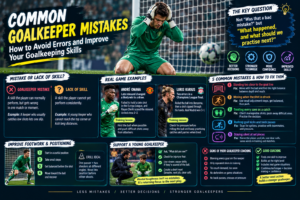
Common Positioning Mistakes
Standing Too Deep
A keeper who stays on the line gives the attacker more goals to aim at. Step out when it is safe.
Rushing Too Early
If you charge forward without reading the touch, the striker can chip you or go around you.
Forgetting the Near Post
At wide angles, the near post must be protected first.
Moving During the Shot
Move before the shot, then set. Do not shuffle while the ball is being struck.
Watching Only the Player
Attackers can fake with their bodies. The ball gives the real information.
Soccer Goalkeeper Positioning Tips for Match Day
Use these soccer goalkeeper positioning tips during games:
- Stay connected to the ball line
- Protect the near post
- Adjust your depth
- Get set before the shot
- Use small footwork drills
- Communicate early
- Watch the attacker’s touch
- Recover after rebounds
- Stay calm after mistakes
- Keep learning from every goal
FAQs
What is goalkeeper positioning?
Goalkeeper positioning is where and how a goalkeeper stands in relation to the ball, goal, attackers, and defenders.
How do I position myself as a goalkeeper?
Stay on the ball line, stay balanced, protect the near post, and adjust your depth based on the attacker’s distance.
What are the best goalkeeper positioning drills?
The best goalkeeper positioning drills include angle drills, near-post drills, 1v1 drills, crossing drills, and free kick wall drills.
Why is goalkeeper positioning for corners important?
Goalkeeper positioning for corners helps you see the ball, control traffic, claim crosses, and react to second balls.
What is the best goalkeeper positioning for crosses?
Goalkeeper positioning for crosses means starting where you can either attack the ball or recover to your goal line.
Conclusion
Strong soccer goalkeeper positioning is not about guessing. It is about reading the game, moving with the ball, setting your body, and protecting the most dangerous space.
Young goalkeepers should build simple habits first. Experienced goalkeeper should focus on detail, timing, and decision-making.
The better your positioning becomes, the easier your saves become.