There’s a different kind of pressure when the ball is whipped into the box. Time slows down for a second. Players are crashing in, defenders are turning, and the outcome often depends on one decision This is where goalkeeper handling crosses becomes more than just technique. It becomes presence, confidence, and control.
At ELP Goalkeeping, this is one of the clearest separators between average and high-level players. The ones who dominate the air don’t hesitate. They read the moment early, move decisively, and commit fully. Understanding how goalkeepers handle crosses properly changes everything—not just for you, but for your entire defensive line.
It Starts Before the Ball Moves: Positioning Is Everything
By the time the cross is in the air, your decision has already been influenced by where you start.
Strong goalkeeper positioning for crosses gives you options:
- Too deep, and you’re reacting late
- Too high, and you’re exposed behind
- Just right, and you control the situation
Good positioning allows you to attack the ball instead of waiting for it. It creates a sense of authority in the penalty area, something every top goalkeeper naturally carries.
This kind of awareness doesn’t happen randomly. It develops over time, especially in structured environments like private goalkeeper training Connecticut, where positioning is constantly refined based on real match scenarios.
Timing the Move: The Difference Between Control and Chaos
Once the ball is delivered, timing takes over.
This is where many goalkeepers struggle—not because they lack ability, but because they hesitate. And hesitation in the air usually leads to mistakes.
Effective goalkeeper timing for crosses means:
- Reading the flight early
- Deciding quickly
- Committing fully
Your movement should feel decisive. Either you go, or you stay—but you never get stuck in between.
This is a core part of goalkeeper aerial awareness, and it directly impacts your ability to deal with pressure in crowded situations. Training environments like group goalkeeper training Connecticut help simulate these moments repeatedly, improving decision-making under pressure.
Claim or Clear: Making the Right Decision Under Pressure
Not every cross should be caught.
A key part of how goalkeepers handle crosses is decision-making. Catching works when you have clear control and space, while punching is safer when you’re under pressure or surrounded.
The goalkeeper cross catching technique requires strong hands, clean timing, and confident movement toward the ball. At the same time, clearing the ball effectively requires direction and power—otherwise, you’re simply creating another chance.
Understanding this balance is what separates reactive goalkeepers from those who control the situation.
Reading the Game Early: Anticipation Before the Cross
The best goalkeepers don’t just react to crosses—they expect them.
Before the ball is even delivered, there are small cues that tell you what’s coming. The body shape of the player on the ball, their touch, the space they’re in, and the movement of attackers in the box all give you information.
This is where goalkeeper aerial awareness becomes a real advantage. Instead of waiting for the cross, you start adjusting your position early, setting your feet, and preparing your movement before the ball leaves the foot.
This ability to read the game is a big part of how goalkeepers handle crosses at a higher level—it turns reactions into anticipation, and anticipation into control.
Owning the Air: Technique Behind Every Successful Catch
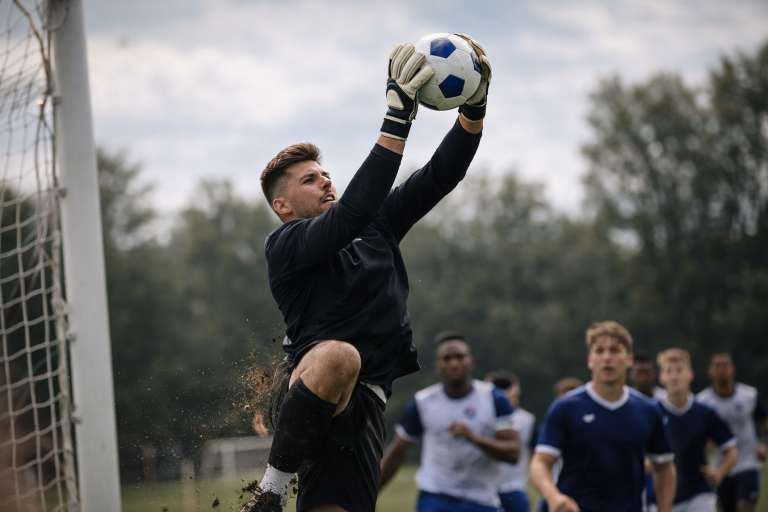
Catching a cross isn’t just about jumping high—it’s about control in motion.
A proper football goalkeeper catching crosses technique includes:
- Leading with the knee for protection as part of your goalkeeper jump technique for crosses
- Attacking the ball at its highest point
- Catching with strong, secure hands
- Bringing the ball safely into the body
This is where goalkeeper high ball technique becomes essential, directly improving your goalkeeper aerial control in high-pressure situations. Developing consistent control in the air allows you to turn chaotic moments into calm ones. The more confident you are, the more your defenders trust you—and that changes how your entire team defends.
This is also where the benefits of goalkeeper training become clear, as technical details like timing, positioning, and hand placement are refined under guidance.
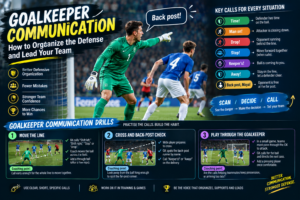
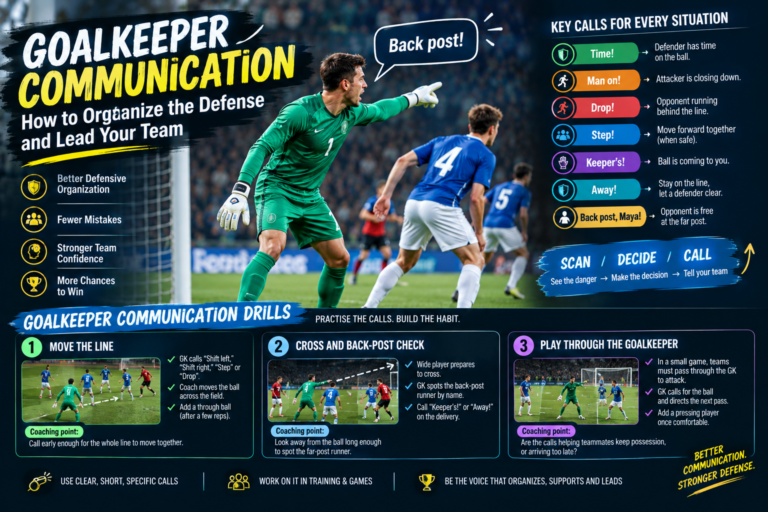
The Role of Communication: Taking Control of the Box
Handling crosses isn’t just physical—it’s also vocal.
Clear, early communication removes uncertainty. A strong call lets defenders know whether to challenge or drop, and it establishes your authority in the box. This is a key part of goalkeeper communication with defenders, and it plays a major role in building trust across the defensive line. Goalkeepers who consistently communicate well don’t just react to crosses—they control the entire situation around them.
Training for Aerial Control: Repetition Builds Confidence
Confidence in dealing with crosses comes from repetition—not guesswork.
To improve goalkeeper handling crosses, training needs to reflect real match scenarios. That means working through pressure, movement, and decision-making all at once.
Effective sessions often include:
- Repeated crossing scenarios from different angles
- Pressure-based challenges with attackers
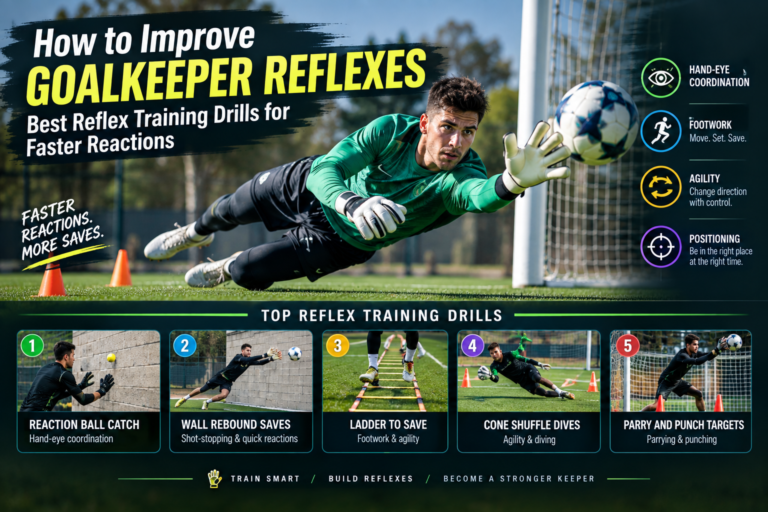
- Reaction-focused goalkeeper aerial ball drills
- Movement drills to improve recovery and positioning
This type of goalkeeper aerial dominance training builds instinct over time. Instead of hesitating, you begin to move naturally and confidently toward the ball.
Environments like goalkeeping training camp are especially effective for this, as repetition and intensity help develop consistent decision-making.
The Real Difference: Presence Over Panic
A well-delivered cross is designed to create chaos. A well-prepared goalkeeper removes it.
Mastering goalkeeper handling crosses and truly understanding how goalkeepers handle crosses at a high level isn’t just about technique—it’s about presence. When your positioning is right, your timing is sharp, and your decisions are clear, you don’t react—you control.
At ELP Goalkeeping, this is one of the most important areas of development. Because when your goalkeeper handling crosses improves, you don’t just deal with danger, you eliminate it before it becomes a problem.
Frequently Asked Questions
How should a goalkeeper handle crosses during a match?
A goalkeeper should focus on positioning, timing, and decision-making—choosing whether to catch, punch, or stay based on the situation.
When should a goalkeeper catch a cross instead of punching it?
Catching is ideal when the goalkeeper has clear control and minimal pressure. Punching is safer in crowded or contested situations.
Why is positioning important when dealing with crosses?
Proper positioning allows goalkeepers to attack the ball early and confidently, reducing reaction time and improving control.
How do professional goalkeepers dominate aerial balls?
They combine strong positioning, precise timing, confident communication, and consistent technique developed through repetition.
What drills help goalkeepers deal with crosses better?
Drills focusing on high ball collection, reaction timing, movement under pressure, and aerial decision-making are most effective.