If you are trying to improve your game, understanding the rules for soccer goalies is a good place to start. A lot of players focus on passing and shooting, but the goalkeeper has a unique role with its own set of rules. These rules affect how the defending team plays, how the attacking team creates chances, and how the game restarts. Once you get clear on the basics, the whole game starts to make more sense.
What is the goalie box in soccer?
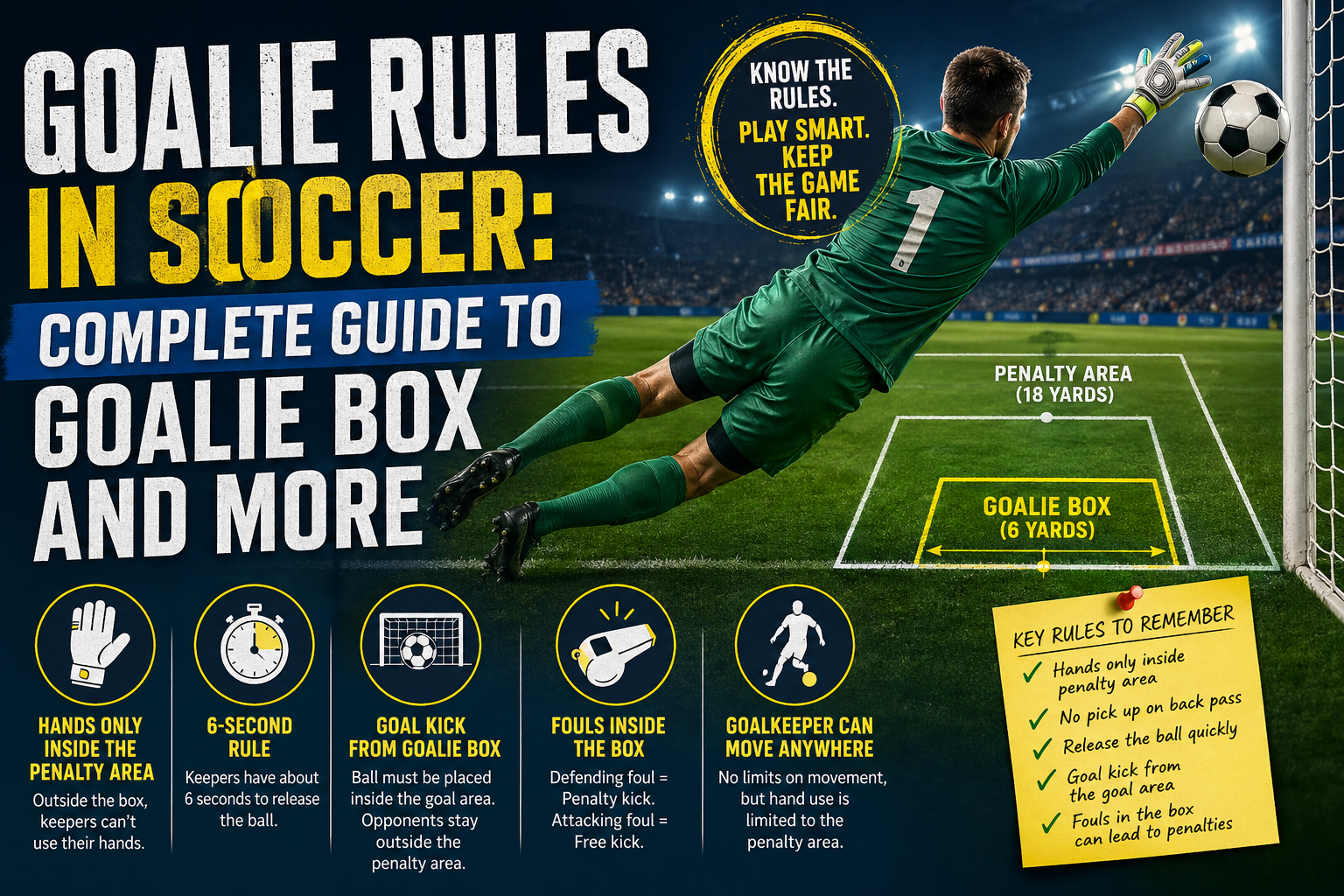
The goalie box in soccer, also known as the goal area, is the smaller rectangle right in front of the goal. It extends about six yards from the goal line into the field. This area sits inside the larger penalty box or penalty area. If you are wondering how big is the goalie box in soccer, it is much smaller than the full penalty area, which stretches around 18 yards out.
This area is mainly used for goal kicks and certain free kicks. When the opposing team puts the ball over the end line, the game restarts with a goal kick taken from inside this box.
Difference between the goalie box and penalty area
It is easy to mix these two up. The goal area is the smaller 6-yard box, while the penalty area is the larger 18-yard rectangle around it. The full penalty area dimensions matter because this is where most key decisions happen.
Inside the penalty area, the goalkeeper has special rights, especially when it comes to handling the ball. Outside of it, they are treated like any other player. Knowing this difference helps you understand positioning and decision making during matches.
Where and when the goalkeeper can use their hands
One of the most important goalie rules soccer players should know is when is the goalkeeper allowed to touch the ball. The keeper can use their hands only inside the penalty area.
They can pick up the ball when it comes from opposing players or loose play. But there are limits. If a teammate passes the ball back with their foot, the goalkeeper cannot pick it up. If they do, an indirect free kick is awarded to the attacking team.
Once the goalkeeper has control of the ball, they are expected to release it within a few seconds. Holding it too long can also lead to an indirect free kick.
How far can a goalie come out in soccer?
A common question is how far can a goalie come out in soccer. The answer is simple. The goalkeeper can move anywhere on the field. There is no restriction on movement.
The only limit is on hand use. Outside the penalty area, they cannot handle the ball. If they do, it counts as a handball and a free kick is awarded to the opposing team. In some situations, especially if it stops a clear chance, it can even result in a red card.
Restarting play from the goalie box
The soccer goalie box rules also cover how the game restarts. During a goal kick, the ball must be placed inside the goal area or on its line. The opposing team must stay outside the penalty area until the ball is in play.
Once the ball is kicked and moves, play continues. Modern goalkeeper rules also allow teammates to receive the ball inside the penalty area, which helps the defending team build from the back.
Fouls and free kicks inside the box
Fouls inside these areas can change the game quickly. If a foul happens against the goalkeeper inside the goal area, the defending team is given a free kick.
But if the defending side commits a foul inside the penalty box, it leads to a penalty kick for the attacking team. This is taken from the penalty spot and is one of the most important moments in a match.
Understanding the penalty arc
The penalty arc is the curved line just outside the penalty area. It helps maintain distance during a penalty. Players from both teams must stay outside the penalty area and behind the arc until the kick is taken.
If players move too early, the referee may order the kick to be retaken. This small detail is part of the official rules for soccer goalies and general gameplay.
Control of the ball and time rules
Another key part of goalie rules soccer is control of the ball. Once the goalkeeper has control of the ball, they cannot hold it for too long. Usually, they have around six seconds to release it.
If they delay too much, an indirect free kick is awarded to the opposing side. This rule keeps the game flowing and prevents time wasting.
Why these rules matter
Understanding the soccer goalie box rules helps you read the game better. Whether you are playing as a goalkeeper or an outfield player, knowing these details improves your decision making.
From knowing how big is the goalie box in soccer to understanding when is the goalkeeper allowed to touch the ball, these small rules make a big difference during real matches.
Once you get comfortable with these basics, you start seeing the game differently. You react quicker, position yourself better, and play with more confidence.
HowEnzo Pereira can help you understand goalie rules better
If you are still getting confused with rules for soccer goalies, working with someone like Enzo Pereira can really help. Instead of just memorising rules, you start understanding how they actually apply in real matches.
He focuses on game situations, like when you can handle the ball, how to position yourself inside the goalie box in soccer, and how to react during penalty kicks or free kicks. This kind of practical learning makes it easier to remember things like when is the goalkeeper allowed to touch the ball or how far can a goalie come out in soccer.
Over time, you stop second-guessing and start playing with more confidence.