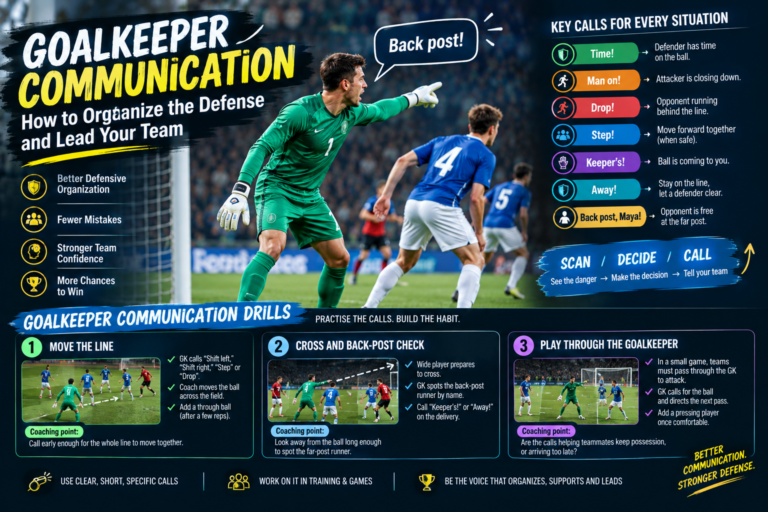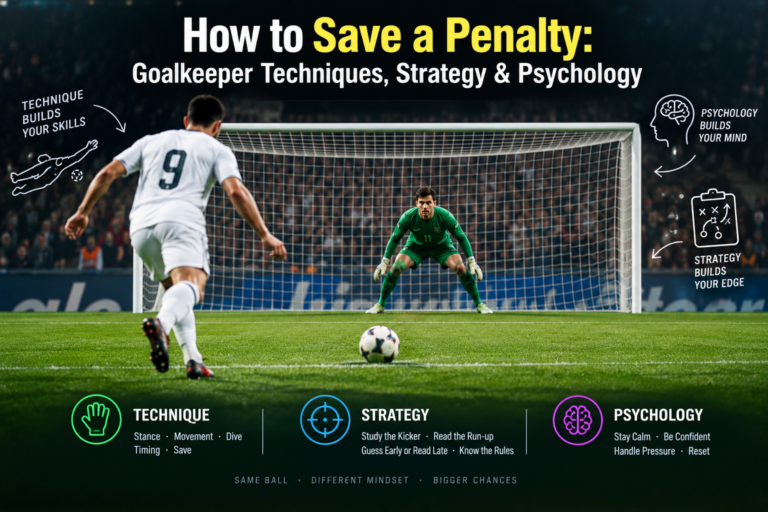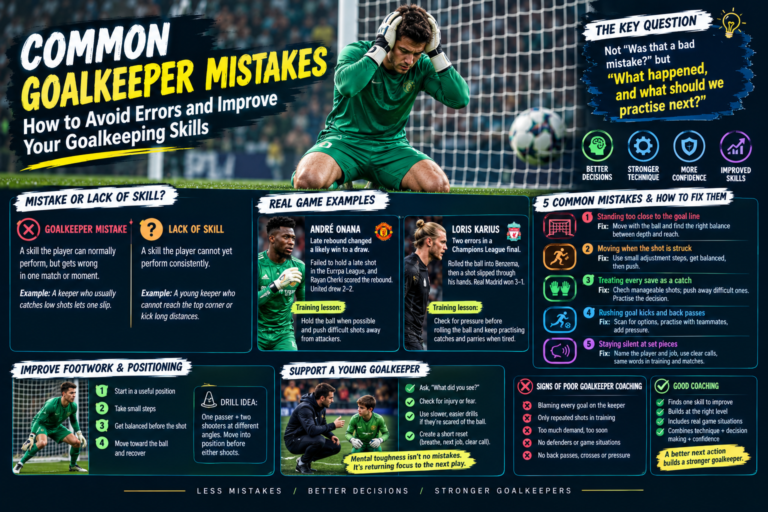
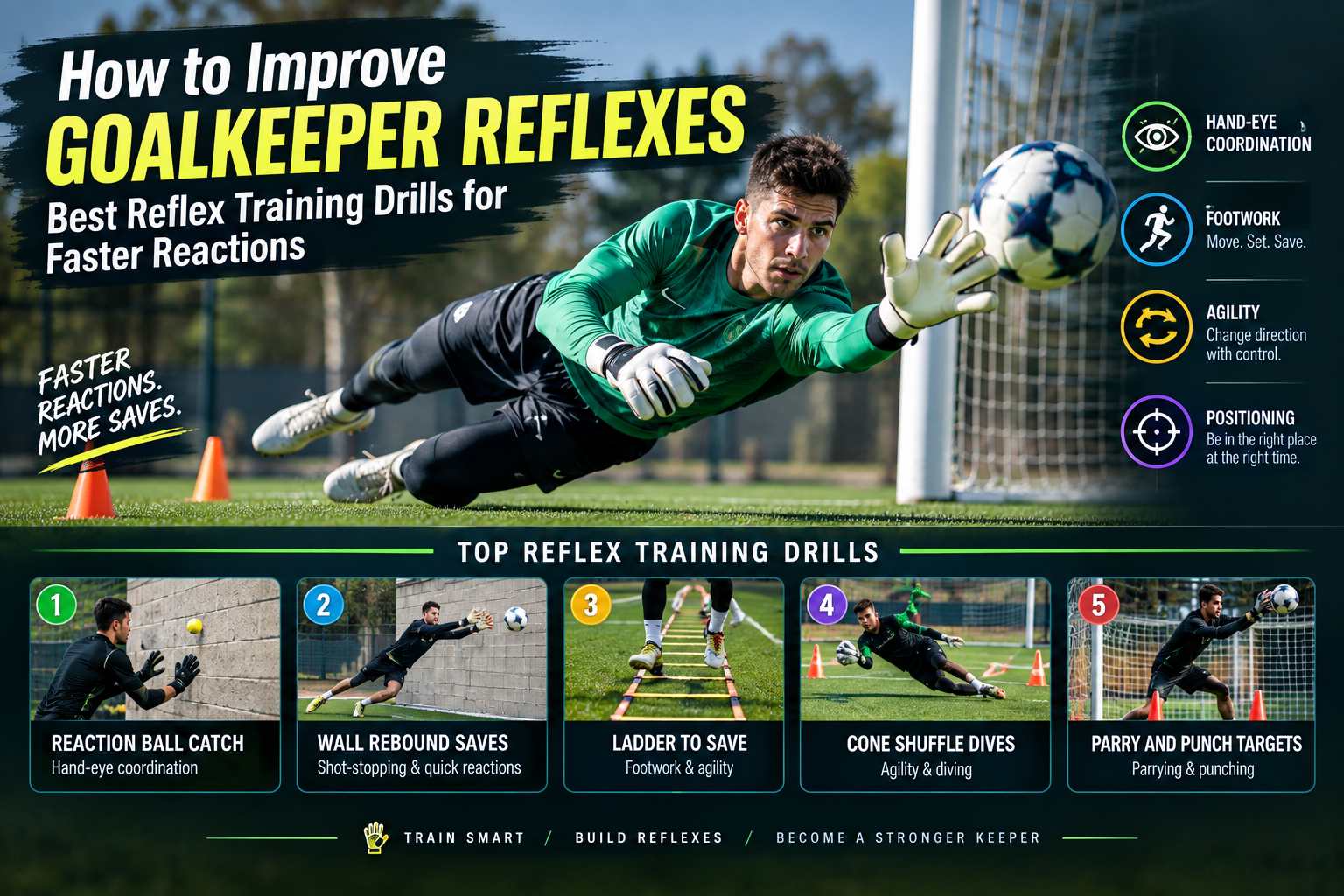
A shot leaves the striker’s boot, and you get roughly one blink to respond. Some keepers seem to save purely on instinct. The truth is, quick reflexes are trained, not born. Here is how to improve goalkeeper reflexes with drills you can run this week.
A shot on a penalty will beat a keeper to the goal in around half a second, and sliding to the side will take even longer. That’s the difference strong keepers take into account and work on with their footwork and set position, rather than just one like lightning-fast hands.
What Makes Reflexes Faster?
Reflexes aren’t about waving your hands faster. They’re a chain: you see the ball, decide, and move. Here is how to improve reflexes as a goalkeeper: strengthen every link.
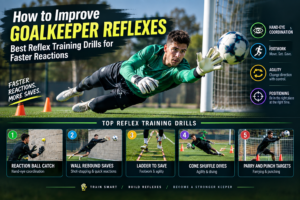
- Hand-eye coordination: tracking the ball and meeting it with your hands.
- Footwork: small steps that keep you balanced and ready.
- Agility: changing direction without losing control.
- Positioning: standing where the shot is easier to reach.
A study of 103 European penalty kicks found that faster reactions went hand in hand with more saves. Smart goalkeeper reflex training builds all four links, not just quick hands.
What Are the Best Goalkeeper Reflex Drills?
These five drills to improve goalkeeper reflexes need only a few balls, cones, and a partner. Run them two or three times a week and stop when your technique slips. Quality beats volume.
New to this? Start with the easier option, and these become goalkeeper reflex drills for beginners.
Warm up first. Five minutes of jogging, leg swings, and easy dives loosen you up for sudden, sharp movements.
1. Reaction Ball Catch
Trains: hand-eye coordination.
How: Stand three yards from a wall and throw a reaction ball, the small rubber kind with an odd shape, against it. Catch the rebound with both hands. Keep your hands soft and behind the ball.
Why it works: Unpredictable bounces force you to watch the ball instead of guessing.
Easier: Use a tennis ball. Harder: Catch one-handed or step closer.
2. Wall Rebound Saves
Trains: shot-stopping and quick reactions.
How: Stand four yards from a wall. Fire a ball at it, then save the rebound. Reset your feet before every ball and keep your hands out front.
Why it works: You get lots of reps with almost no time to think.
Easier: Throw softer with two hands. Harder: Move to two yards and aim low, then high.
3. Ladder to Save
Trains: footwork and agility.
How: Run through an agility ladder with quick, light steps, two feet in every square. As you clear the last one, your partner throws a ball to either side. Make the save.
Why it works: You learn to move fast, stop balanced, and get your hands out.
Easier: Walk the ladder. Harder: Have your partner delay the throw.
4. Cone Shuffle Dives
Trains: agility and diving.
How: Set two cones six yards apart. Shuffle between them, and when your partner shouts “ball,” they toss one just out of reach. Dive and catch it. Good diving drills can also help you build confidence with your landing technique.
Why it works: You go from moving to diving with no pause, just like a match.
Easier: Dive from your knees onto soft grass. Harder: Use low, fast throws and add fakes.
5. Parry and Punch Targets
Trains: parrying and punching.
How: Put a cone outside each post. Your partner throws hard shots at you. Parry each one toward the cone on that side, away from the goal. For a high ball, punch with a firm fist and drive it up and out. Catch when you can hold it safely, and parry when you can’t.
Why it works: Aiming your rebound teaches control, not just contact.
Easier: Softer throws. Harder: Add a second player chasing the rebound.
Add a Decision
Once the basics feel easy, add a decision. Your partner shouts “left” or “right” just as they throw, and you must save with that hand. The best goalkeeper reaction drills make you choose and move at the same time.
Fix Your Setup First
Great catches get easier when your placement is correct. Lean on the balls of your feet, knees slightly bent, hands out in front. Keep your head still and your eyes on the ball all the way into your hands. Stop in front of the shot, not in the shot.
If you’re always scrambling, your reflexes are cleaning up a positioning problem. Work through these goalkeeper positioning drills to learn where to stand.
Build a Simple Weekly Plan
Not sure how to improve reflexes as a goalkeeper week to week? Try this:
- Two reflex sessions, 20 to 30 minutes each.
- One short block of goalkeeper footwork drills, such as ladders.
- One short block of goalkeeper agility drills, such as cone shuffles.
- Rest days, because sharp reactions need fresh legs.
Count your clean saves each session. When you catch most of them, raise the difficulty. Mixing goalkeeper drills for reaction, footwork, and shot-stopping in one session also feels closer to a real match. Film a goalkeeper training session now and then, too. Watching yourself shows what a coach would spot.
Common Mistakes That Slow Your Reactions
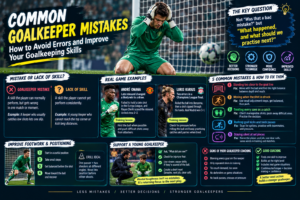
- Diving too early. Committing before the shot is struck is a gamble.
- Standing flat-footed. You can’t push off from your heels.
- Trading technique for speed. Sloppy reps build sloppy habits.
- Repeating one drill forever. Rotate your reflex drills so your body can’t predict what comes next.
Your Next Move Between the Posts
Your reflexes won’t transform in a week, but they will indeed transform. Choose two drills from this list and do them this week. Afterward, add in footwork, positioning, and parry work as you go. Have a modest goal in mind: 20 wall rebound saves in a row without a fumble. Once you accomplish that, inch forward.
This is how to improve goalkeeper reflexes permanently: consistent goalkeeper reflex training, good form, and one honest rep at a time. The next time you get hit with a shot, your body will be ready.
Frequently Asked Questions
How long does it take to get faster reactions in goal?
There’s no fixed timeline. It depends on where you start and how often you train. Stick with two or three focused sessions a week, track your saves, and judge progress over months, not days.
Can goalkeepers improve their reflexes at any age?
Yes. Some of your reaction speed is natural, but timing, footwork, anticipation, and hand-eye coordination all get better with practice. Younger players should keep sessions light and fun, and older players should warm up well.
Are reflexes or positioning more important for a goalkeeper?
Both matter, and they work together. Good positioning turns hard saves into easier ones, and sharp reflexes handle the shots that still get through. Train them side by side.
What equipment do I need for reflex training at home?
A wall, a few balls, a reaction ball, cones, and an agility ladder cover most of these drills. A partner helps, but the wall drills work solo. Use soft grass or a mat for any diving work.
Do reflex drills help with penalty saves?
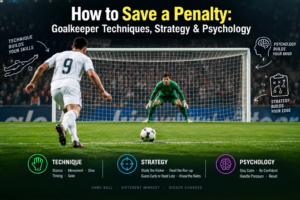
They help, but penalties also reward reading the kicker and timing your move. Reflex work covers the reaction, while positioning and anticipation cover the rest.