You know the moment. No cover, nobody tracking back, just you and some kid with the ball who already knows exactly where he wants to go. Two seconds. That’s about all the time there is to get this right.
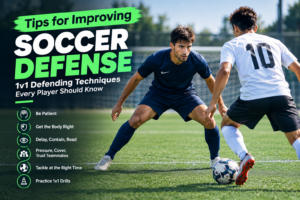
1v1 defending isn’t really a speed contest, whatever the fastest guy on the team thinks. Plenty of average athletes defend this stuff brilliantly because they read the attacker instead of chasing the ball. Below is a breakdown of soccer 1v1 defending techniques that actually hold up when the pressure’s on, plus a handful of 1v1 defending soccer drills worth stealing for the next session.
Patience Beats Speed, Almost Every Time
New defenders rush. They see the ball, they lunge, and the attacker’s already gone before the foot lands. Soccer defending, done properly, works backwards from that instinct. The good ones slow everything down.
Patience buys time. A half-second for a teammate to recover, a chance for the attacker to show their hand first. If there’s one piece of advice that covers most of the best tips for improving soccer defense, it’s this: wait longer than feels comfortable. A calm defender wins more of these battles than one who dives in on instinct, and it’s not close.
Get the Body Right Before Anything Else
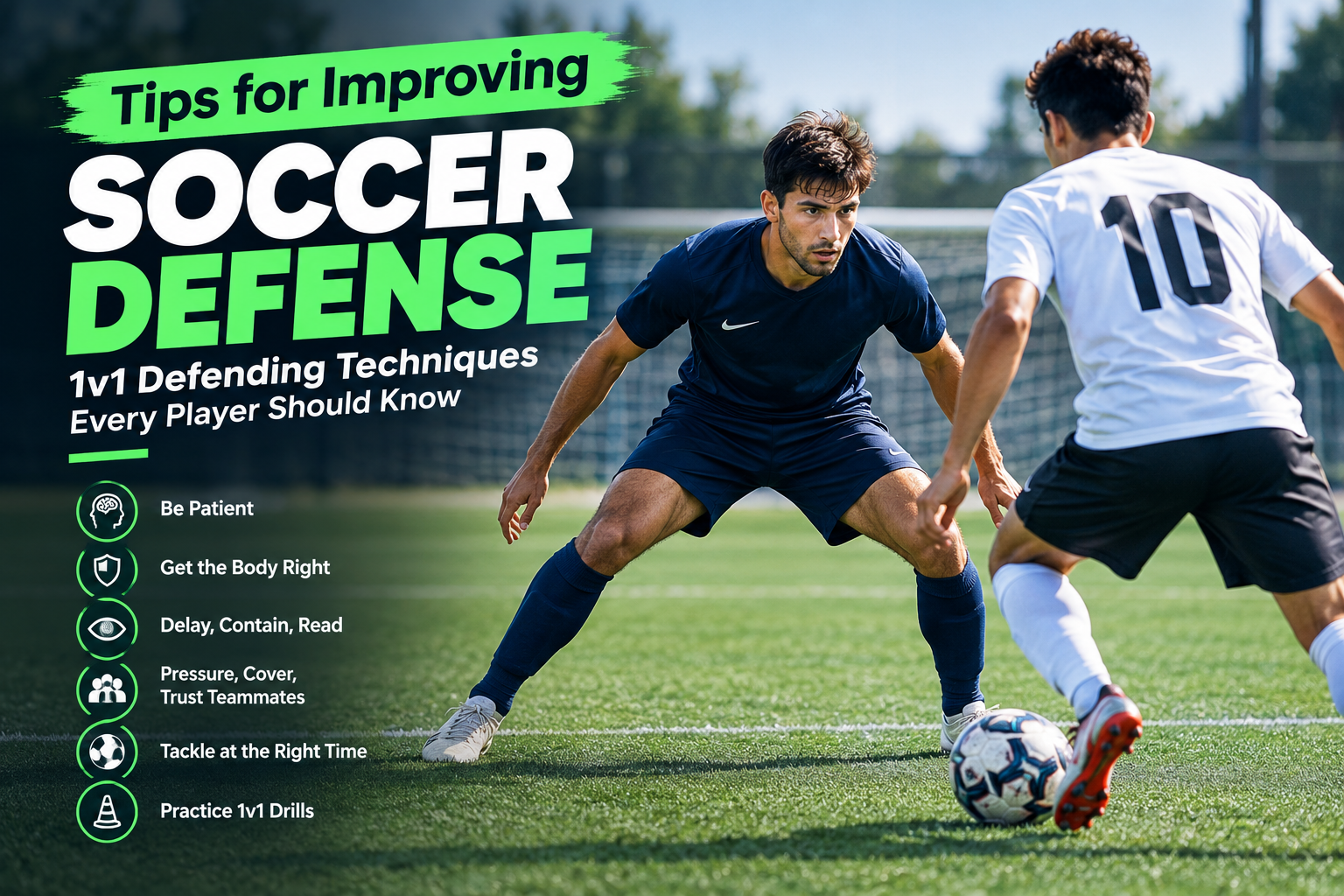
Good defensive positioning starts with body positioning, and everything else- footwork, tackling, timing- builds on top of it. Stand side-on, not square to the attacker. Angle the body so the attacker is being pushed toward the touchline, not given a straight road to goal.
A good defensive stance – knees bent, weight forward, leaning forward on the balls of your feet, low and ready. That’s where your balance and quickness really are. Not behind that choke hold to run faster. Standing upright and complacent? That’s the number one, quiet killer. It ruins your reaction time; it makes turning around seem super sluggish.
Delay, Contain, Read What’s Coming
Worth separating delay from contain, since defending tips in soccer tend to lump them together like they’re the same skill. They’re not. Delay just means slowing the attacker without going for the ball yet. Contain means staying close enough that they can’t turn or burst past cleanly.
Watch the ball. Not the feet, not the shoulders, the ball. Stepovers and little fakes exist for one reason: to pull the eyes somewhere useless. Keep the footwork small and quick, short adjusting steps rather than big crossover strides that leave a defender leaning the wrong way right when it matters.
Push them wide. That’s more or less the whole answer to how to defend a 1v1 in soccer, since most attackers lose a step of confidence once they’re steered toward the sideline and the options start shrinking.
Pressure, Cover, and Trusting Teammates
Football defending rarely happens in total isolation, even when it feels that way standing there alone. A sharp defender always has half an eye on where help might come from. Pressure speeds up the attacker’s thinking, usually for the worse, but it only works if someone’s got cover behind in case it goes sideways.
Goalkeeper awareness sneaks into this too, more than people expect. A defender who understands basic goalkeeper positioning can steer attackers toward the areas the keeper’s already set up for, instead of opening a clean lane straight at goal.
When to Tackle in Soccer
Timing is the whole thing. When to tackle in soccer comes down to one test: go in when you’re sure you’re going to win it clean, which is typically when the opponent’s contact gets a little sluggish, or they stumble for that half-second.
Effective soccer tackling techniques are: the block tackle, using the inside of your foot while remaining balanced and not over-complicating your technique; or the poke tackle, a short jab into the ball which nudges it free but doesn’t involve your full body. Sliding tackles should stay a last resort. Mistime one and the defender’s out of the play entirely, sometimes for good chunks of the half.
1v1 Defending Soccer Drills Worth Running
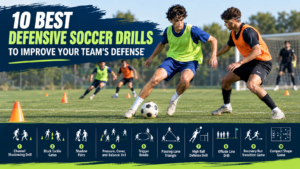
A few 1v1 soccer drills that actually translate to game speed, and double as some of the more practical defending tips in soccer for closing an attacker down fast:
- Shadow defending. Attacker dribbles, defender mirrors every move, no contact at all. Pure footwork and positioning.
- Channel drill. Narrow grid, attacker tries to get through, defender works on delaying and steering toward the edge.
- Reaction gates. Cone gates on either side; coach calls a direction; defender shuffles and reacts. Sharpens reaction time fast.
- Live 1v1 soccer drills. Full speed from the edge of the box. The defender’s only job is buying time until help arrives.
Ten minutes of this as part of regular soccer defense training, run consistently, and it starts sticking under real pressure instead of falling apart the first time a game gets fast. For players chasing quicker footwork or sharper recovery steps, structured agility and movement training built for reaction speed carries over to outfield defending surprisingly well.
Defending Near the Penalty Area
1-on-1 soccer turns riskier fast once it’s inside the box. A mistimed tackle near the penalty area can hand the other team a penalty, so patience matters more there than anywhere else on the field. Staying on your feet and forcing a tough shot beats a risky lunge most days of the week.
Final Thoughts
So, what is the best way to defend a 1v1? Stay patient, get the angle right, pick the moment instead of forcing it. Defensive soccer tips for 1v1 situations all circle back to the same idea, really: control the space, not the player chasing it. That’s the real core of the best tips for improving soccer defense covered here: positioning, patience, and knowing exactly when to commit.
Keep working on 1v1 defending, pair it with honest footwork reps, and at some point the whole thing flips. It stops feeling like reacting and starts feeling like the defender’s the one calling the shots.
FAQs
What is the most important skill in 1v1 defending?
Patience, above everything else. Defenders who wait for the right moment instead of rushing a tackle win more duels and don’t get caught exposed when it doesn’t work out.
How close should a defender get to an attacker in a 1v1?
Close enough to limit the options, not so close that one quick touch beats them instantly. An arm’s length is a decent rule of thumb.
What’s the safest tackle to use in a 1v1 situation?
The block tackle, generally. It keeps the defender on their feet and balanced. Save sliding tackles for the moments nothing else is left.
How can defenders improve their reaction time?
Reaction drills help a lot: cone gates with a coach calling directions, that sort of thing. Regular agility work builds the quickness needed to adjust on short notice too.
Should a defender always try to win the ball in a 1v1?
Not always. Delaying and steering the attacker away from danger is often worth more than a risky tackle attempt, especially anywhere near the penalty area.
How does defensive positioning affect 1v1 success?
Good positioning cuts off an attacker’s best options before the duel even starts. A side-on stance that blocks the dangerous lane makes everything that follows a lot easier.