Goals don’t come from magic, honestly. They come from reps, the boring kind nobody posts on Instagram. Footwork before the shot. The exact half-second a run starts. Staying cool when it’s just you and the keeper and your legs feel like lead.
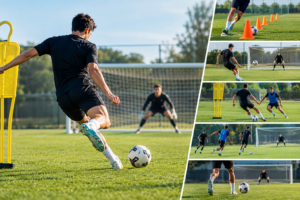
This guide walks through soccer drills for forwards built around finishing, movement, and making better decisions near goal. Run them with a full squad or on your own with a wall and a ball bag. They’re meant to actually show up on matchday, not just look tidy in a cone drill video. Think of this as a working set of goal-scoring drills and soccer drills for forwards you can run on repeat, season after season, not a one-off session you forget by Thursday.
Good soccer training for strikers isn’t about firing off a hundred shots and crossing your fingers. It’s training the right habit, under some kind of pressure, so it’s still there when the game speeds up on you.
Why Movement Matters as Much as the Shot
Plenty of strikers can strike a ball. They still don’t score much. Why? Half the time they’re just standing in the wrong place when it matters.
Off-the-ball movement is what actually gets a forward into space to begin with. A midfielder with average pace and a good sense of timing will get in between a slower player who has excellent acceleration and is standing still waiting for the ball to arrive. Good decisions in the final third often come down to a split second of judgment, not quick reactions-and that judgment is formed well in advance.
Finishing drills create this muscle memory where you’re not having to think about the shot; your body just knows. Movement work creates this instinct to see a gap and read where a defender’s hips are pointing. Combine the two together, and you’ve got someone who scores on most days, not just a hot one.
Finishing from Different Angles and Distances
Strikers almost never get the same look at goal twice. So why train like they will? That’s the whole idea behind these soccer finishing drills: don’t let the striker get comfortable with just one angle.
How to set it up:
- Five cones, arced around the penalty area.
- A server feeds the ball to each cone, one at a time.
- First-touch or quick two-touch finish from every spot.
- Run the whole set again off the other foot.
This builds shooting technique across tight angles and from further out too. Watch body positioning closely, the plant foot should point at the target, not wherever the shoulders happen to be facing. Mix the power up as well. Smashing every shot as hard as possible isn’t the point. Accuracy is.
One-Touch Shooting and Quick Reactions
Games don’t usually give a forward time to take a touch first. This drill closes that gap fast.
How to set it up:
- Server stands near the box, a pile of balls at their feet.
- Balls come in quick, some rolling, some bouncing or in the air.
- Striker finishes first time. No settling touch, no exceptions.
- Speed the service up as the player gets comfortable.
One-touch shooting sharpens reaction speed and composure quicker than most drills manage. Player struggling? Don’t slow the whole thing down, just bring the server a few steps closer so the pace stays up but the technical ask eases off a bit.
Quick Turn and Shoot
Strikers get the ball with their back to goal more often than people assume. They’ve got to spin and shoot before a defender recovers.
- Forward faces away from goal, receives a pass from behind.
- On the touch, spin into open space, inside-foot turn, drag-back, half-turn, whatever suits them.
- Shot comes right off the turn.
- Once that’s clicking, throw in a passive defender.
This one sharpens first touch, balance, and finishing without needing extra room to work with. It also forces a read on the defender’s position in that one split second right after the ball lands.
Off-the-Ball Movement and Attacking Runs
A gorgeous finish means nothing if the striker’s never in a spot to use it. This is where off-the-ball runs for strikers separate the good from the great, and it’s the part a lot of training sessions skip.
Near-post run drill:
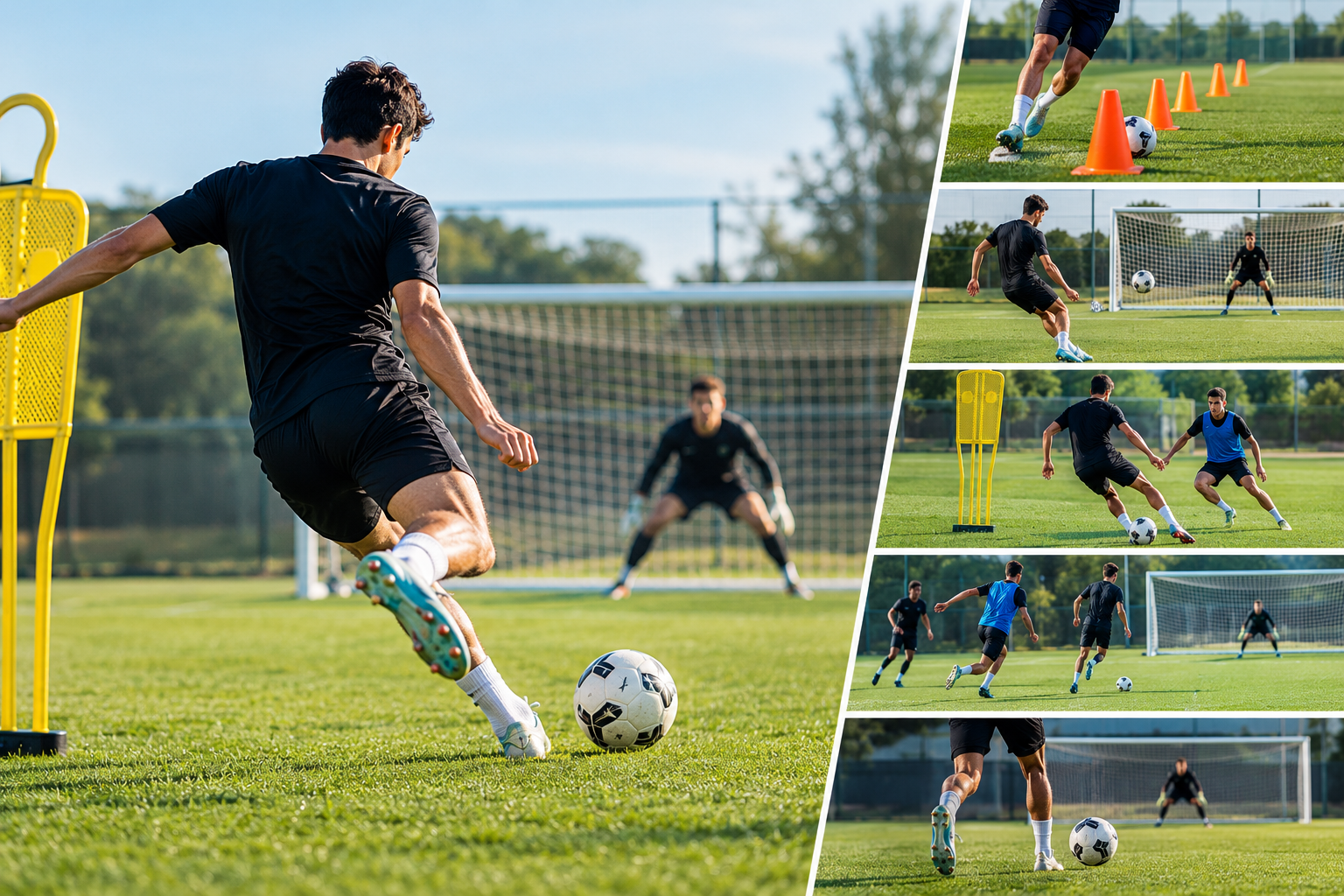
- Mannequin or passive defender marks the striker just outside the box.
- Forward checks away short, then bursts toward the near post into open ground.
- Teammate times the pass so it arrives right as the run does.
Teaches the kind of striker movement that creates separation, plus the timing to arrive on the ball rather than stand around waiting for it. These attacking runs are what turn a crowded box into an actual chance, and good movement off the ball is just as valuable as the finish itself, maybe more so, since it’s what creates the opportunity in the first place.
Beating the offside line:
Timing beats raw speed here, every time. Have the server play the through ball the instant the run starts, not a beat before. Forces the striker to time off the pass instead of guessing early. Fewer flags, sharper runs.
Through Balls and Counter-Attack Finishing
Scoring on the break asks for a different kind of calm than finishing from a settled move.
- Start from the halfway line, quick two or three-player combo.
- Midfielder slides a through ball into the striker’s path as the group breaks into the attacking third.
- Forward controls at pace, finishes in stride if they can.
Counter-attack finishing teaches a player not to panic just because the tempo picked up. That composure, even sprinting flat out, carries straight over to matchday.
Receiving Under Pressure in the Box
Defenders don’t often give a forward a clean run at goal. Usually there’s someone breathing down their neck. This drill is really about how to finish under pressure, since a clean shot rarely comes free.
- Defender presses from behind.
- Server plays the ball to feet.
- Forward shields it, buys half a yard, shoots within two touches.
Builds the strength and the patience needed to operate in a packed penalty area, where space gets earned, not handed out.
Reading the Goalkeeper and Picking Smarter Shots
A sharp shooter can use your goalkeeping to tell where to place his shot. From the line against a good keeper, you can read their tendencies during training. He may go too close to the post sometimes or dive early on pure instinct.
Working out of one-on-one saves, including finishing setups with penalties, helps a striker learn how to choose a side – rather than just smash the ball and hope for the best. It can also be helpful to know the height of a soccer goal – simple, but surprisingly effective.
Adjusting Drills for Different Ages and Levels
Younger players tend to do better with passive defenders, shorter runs, more reps at an easier pace. Coaches working with kids can pull ideas from general youth training activities and layer in difficulty slowly from there.
Older or sharper players need live defenders and faster service, closer to actual game speed. So what are the best striker drills? Honestly, it depends on the kid in front of you. One who finishes fine but moves poorly needs more work on runs. One who glides into space but can’t finish needs more time in front of goal, full stop.
Bringing It All Together
The fastest way to get better. Finish and Movement in the same box, not separate boxes to check off. Striker drills for finishing and movement should vary the angle, speed and pressure, not run through the exact same pass-to-shoot line every week.
Consistency wins out over intensity here, almost always. Stick with real soccer training for strikers, built around these same reps week after week, and a forward ends up with the instincts and accuracy to put away more of the chances that actually come their way.
FAQs
What are the best drills for improving a striker’s finishing?
Mix angled finishing, one-touch shooting, and quick turn-and-shoot reps. Changing the distance and pressure keeps a striker ready for different looks instead of just one repeated shot.
How can forwards improve movement off the ball?
Work on check-away runs and timed sprints against a marker. Timing the run matters just as much as raw speed when it comes to finding clean space.
How do strikers avoid offside on attacking runs?
Time the sprint to the passer’s release, not before. Drills pairing a through ball with a delayed run build that habit until it’s second nature.
What’s the best way to practice finishing under pressure?
Add a tight defender or cut down reaction time. Training the touch and the shot together is a lot closer to what actually happens in a real game.
How can strikers read a goalkeeper before shooting?
Repeated one-on-one finishing helps the most. Over time a player starts clocking a keeper’s habits, like favoring one side, and uses it to pick smarter shots.
Can these drills work for younger or newer players?
Yes. Ease off the defender pressure, shorten the distances, slow the service down. The core of each drill stays the same either way.