There’s a big difference between touching the ball and controlling it.
You can make a save and still give away a second chance, or you can secure it cleanly and completely shut down the attack. That difference comes down to mastering goalkeeper catching techniques.
For many players, learning how goalkeepers catch the ball properly is what transforms their game. It’s not just about stopping shots—it’s about controlling them.
At ELP Goalkeeping, this is one of the first things developed. Because once a goalkeeper builds strong handling habits, confidence follows, and mistakes start to disappear.
Why Hand Positioning Is the Foundation of Every Catch
Before anything else, your hands determine whether you hold the ball or spill it.
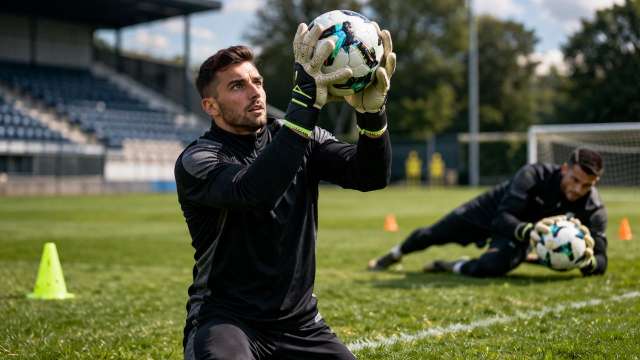
Strong soccer goalkeeper catching technique starts with correct shape and timing. The most common example is the “W” shape for higher balls, which allows the hands to absorb impact and guide the ball safely inward.
A good catching position includes:
- Fingers spread and relaxed
- Hands forming a strong shape behind the ball
- Eyes locked on the ball until contact
These are key parts of goalkeeper hand positioning drills, helping build consistency and control.
This is also where many players begin to understand how to be a good goalkeeper in football, because clean handling removes unnecessary pressure from every situation.
Catching High Balls with Control and Confidence
High balls often create panic, especially in crowded areas, but strong goalkeeper high ball catching turns those situations into opportunities to take control.
To catch effectively in the air, you need to attack the ball at its highest point, keep your hands strong and stable, and secure it cleanly before bringing it into your body. This is a core part of goalkeeper safe catching technique, particularly when dealing with crosses or aerial pressure.
Training environments like private goalkeeper training Connecticut help refine this technique so goalkeepers stay confident and composed even under pressure.
How to Handle Low Shots Without Spilling the Ball
Low shots are often underestimated, but they’re where many mistakes happen.
A proper goalkeeper low ball catching approach focuses on control first, not just stopping the ball.
Your technique should focus on:
- Getting your body low quickly
- Keeping hands behind the ball
- Bringing the ball safely into your chest
This is essential for goalkeeper catching low shots, where preventing rebounds is just as important as making the save.
Goalkeepers training in group goalkeeper training Connecticut environments often improve this quickly, as repetition builds consistency under pressure.
The Small Details That Prevent Rebounds
One of the biggest differences between average and advanced goalkeepers is rebound control.
Strong goalkeeper rebound control technique comes from using soft hands to absorb impact, bringing the ball into your body quickly, and avoiding unnecessary deflections that create second chances. These small details are what allow goalkeepers to turn difficult saves into controlled outcomes.
This is also where the benefits of private soccer goalkeeper training become clear, as even minor adjustments in technique can eliminate repeated mistakes.
Grip Strength and Contact: What Actually Secures the Ball
Catching isn’t just about getting your hands to the ball—it’s about what happens at the moment of contact.
Grip strength plays a bigger role than most goalkeepers realize. When your hands are strong and controlled, you absorb the impact instead of letting the ball bounce off. This is especially important in wet conditions, powerful shots, or unpredictable spins.
Developing this part of your goalkeeper catching techniques comes through repetition and targeted work, including controlled catching under pressure and focused goalkeeper hand-eye coordination drills.
The stronger your contact, the less you rely on luck—and the more consistently you secure the ball cleanly.
Training Your Hands to React Without Thinking
Catching isn’t just technique—it’s repetition.
Consistent goalkeeper catching drills help build automatic reactions so your hands move instinctively without hesitation.
Effective soccer goalkeeper catching technique includes:
- Fast reaction catching drills
- Close-range shot handling
- Repetition under pressure
- Targeted soccer goalie catching technique exercises
This is where youth goalkeeper catching drills play a major role, helping younger players develop strong habits early. Training environments like goalkeeping camp training accelerate this process, turning technique into instinct.
Why Some Goalkeepers Hold Everything and Others Don’t
You’ll often see two goalkeepers face the same shot but get very different outcomes.
One holds it cleanly, the other spills it. The difference isn’t luck—it’s technique and consistency.
Strong goalkeeper ball handling technique allows you to control the ball instead of reacting to it. When you truly understand how goalkeepers catch the ball, you remove uncertainty from your game and start controlling situations instead of surviving them.
Bringing It All Together
At the highest level, catching isn’t something goalkeepers think about—it’s something they trust.
Mastering goalkeeper catching techniques and refining your soccer goalkeeper catching technique allows you to play with confidence and consistency. You stop worrying about rebounds, second chances, or mistakes.
At ELP Goalkeeping, this is a core part of development. Because when your handling is strong, everything else in your game becomes easier.
And when you fully understand how goalkeepers catch the ball, you don’t just make saves—you control the entire moment.
Frequently Asked Questions
What is the W-catch technique in goalkeeping?
The W-catch is a hand position used for high balls, where the fingers form a “W” shape behind the ball to absorb impact and secure control.
How do goalkeepers catch low shots?
By getting their body behind the ball, keeping hands low and secure, and bringing the ball safely into their chest to prevent rebounds.
Why do goalkeepers sometimes drop the ball?
Drops usually happen due to poor hand positioning, weak contact, or lack of focus during the catch.
How can goalkeepers improve grip strength for catching?
Through repetition, hand strengthening exercises, and consistent goalkeeper catching drills.
How do professional goalkeepers improve their catching ability?
They train with high repetition, refine technique, and improve hand-eye coordination through structured drills.