If you’re wondering how to make goalkeeper gloves sticky, start by cleaning the latex palms, keeping them slightly damp, and avoiding anything that damages the glove surface. Good Grip comes from clean latex, proper moisture, and smart care habits, not from risky hacks that can ruin your gloves.
Every goalkeeper knows the feeling. Your gloves were tacky and reliable when they were new, but after a few training sessions, the grip starts to fade.
That doesn’t always mean your gloves are finished. Sometimes, the latex is just dirty, dry, or clogged with mud, sweat, and dust. With the right care routine, you can bring back some of that sticky feel and make your gloves perform better again.
This guide explains how to make goalie gloves sticky, how to restore glove grip, and what to avoid if you want better glove longevity.
Why Goalkeeper Gloves Lose Stickiness
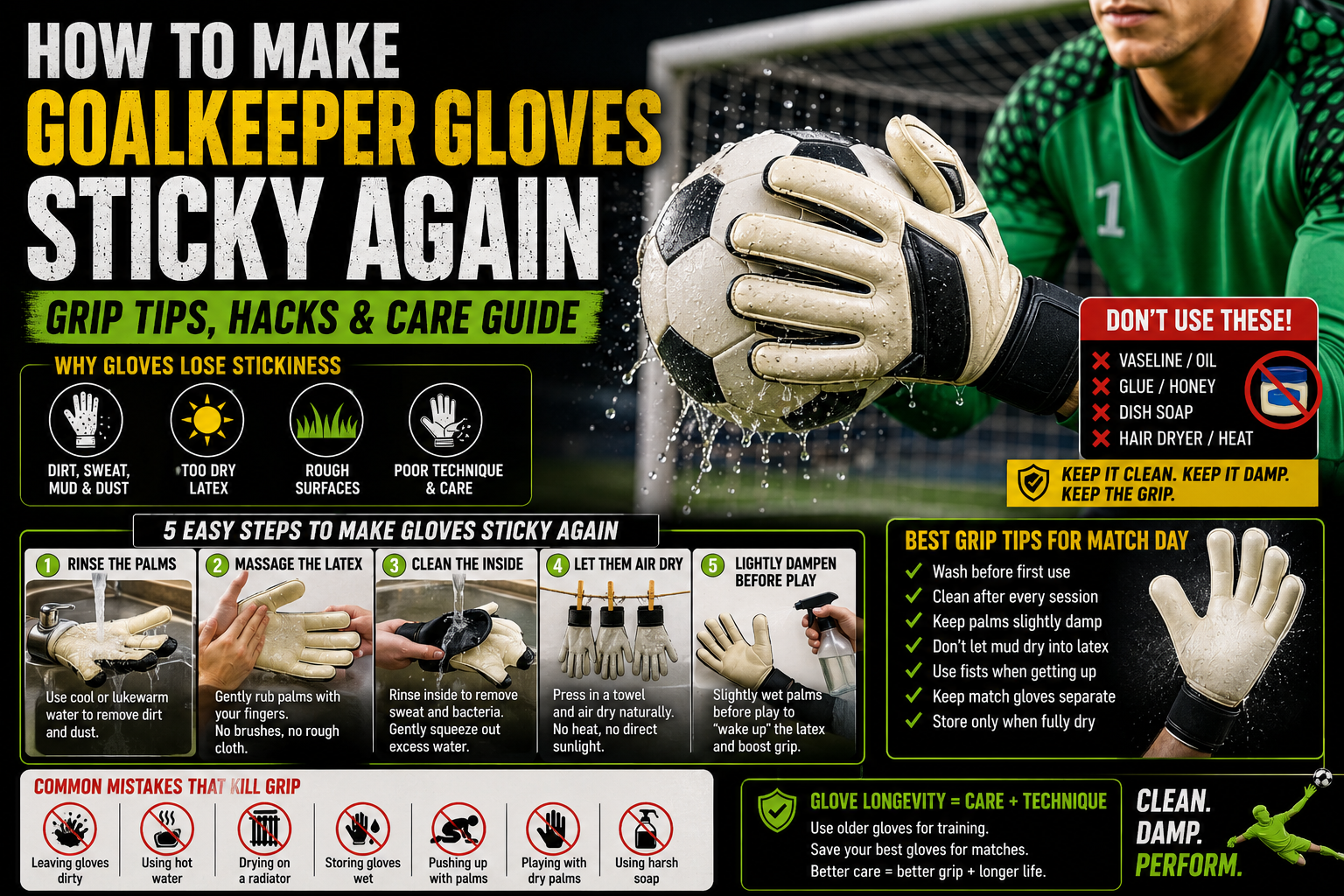
Goalkeeper gloves lose grip because the latex palm picks up dirt, sweat, grass, mud, sand, and tiny surface particles. These small particles sit on the latex and stop it from gripping the ball properly.
Gloves also lose stickiness when they’re too dry. Latex usually performs better when it’s slightly damp, not completely dry.
Your technique matters too. If you land on your palms, push yourself up from the ground with the latex, or train often on rough turf, your gloves will wear faster.
So, goalkeeper glove grip enhancement isn’t only about cleaning. It’s also about how you use, dry, and store your gloves.
How to Make Goalkeeper Gloves Sticky Again in Easy Steps
The safest way to improve grip is simple: clean the gloves, dampen the palms, and protect the latex.
Step 1: Rinse the Palms
Start with cool or lukewarm water. Gently rinse the glove palms to remove loose dirt and dust.
Don’t use hot water. Heat can dry out the latex and make it weaker.
Step 2: Massage the Latex
Use your fingers to gently rub the palm surface. Focus on dirty areas, especially the fingertips and lower palm.
Don’t scrub with a brush. Don’t use rough cloth. The latex is soft, so it needs gentle handling.
Step 3: Clean the Inside Too
Sweat inside the gloves can cause a smell and bacteria. Let water move through the inside of the glove, then gently squeeze it out.
This helps the gloves feel fresher and improves overall care.
Step 4: Let Them Air Dry
After washing, press the gloves in a clean towel. Then let them air dry naturally.
Don’t use a radiator, hair dryer, tumble dryer, or direct sunlight. Heat can crack the latex and reduce grip.
Step 5: Lightly Dampen Before Playing
Before training or a match, lightly wet the palms. Don’t soak them. Just make them slightly moist.
This helps “wake up” the latex and can improve Grip when catching, holding, and parrying shots.
How to Make Goalie Gloves Sticky Without Spray
If you want to know how to make goalkeeper gloves sticky without spray, water is the safest option.
You don’t always need glove spray or grip products. Clean water can help reactivate the latex and bring back some tackiness, especially if the gloves are still in decent condition.
Here’s the simple method:
- Wash the gloves gently
- Let them dry naturally
- Lightly dampen the palms before play
- Keep the palms slightly moist during the session
- Clean them again after use
This is safer than using random household products. Some “hacks” may feel sticky for a few minutes, but they can damage the latex in the long run.
Does Vaseline Make Goalkeeper Gloves Sticky?
A very common question regarding the stickiness: Does vaseline make goalkeeper gloves sticky?
No, Vaseline isn’t a good idea for goalkeeper gloves.
It may feel tacky at first, but it can clog the latex, attract dirt, make the ball greasy, and damage the glove palm. It can also make handling unpredictable because the surface becomes slippery instead of properly grippy. Even the thought of it makes it gross.
If you want to restore glove grip, stick to water, gentle washing, and proper glove care. Don’t use Vaseline, oil, glue, or sticky household products.
Are Sticky Gloves Allowed in Soccer?
Many players ask, ” Are sticky gloves allowed in soccer?
Goalkeeper gloves are allowed, and modern gloves are naturally designed with grippy latex palms. That’s normal.
The problem comes when a player adds illegal or unsafe substances to gain an unfair advantage or make the gloves unnaturally sticky. Rules can vary by competition, so it’s always best to avoid questionable products and stick to clean, legal glove care methods.
In simple words: grippy goalkeeper gloves are fine, but don’t cover them with strange substances.
Note Down theBest Grip Tips for Match Day
If you want better match-day grip, don’t wait until warm-up to care for your gloves.
Use these simple tips:
- Wash gloves before first use
- Clean them after training
- Keep palms slightly damp
- Don’t let mud dry into the latex
- Don’t push up from the ground with your palms
- Use fists when getting up after dives
- Keep match gloves separate from training gloves
- Store gloves only when they’re fully dry
Small habits can make a big difference. You won’t stop latex from wearing down, but you can slow the damage.
Glove Longevity: How to Make Gloves Last Longer
Good Glove Longevity depends on care and technique.
Softer latex usually gives a better grip, but it often wears faster. That’s why premium match gloves need careful handling. Training gloves may last longer, but they may not feel as sticky.
If you train on artificial turf, your gloves may wear even faster because the surface is rougher than natural grass.
To make gloves last longer:
- Use older gloves for training
- Save best gloves for matches
- Wash them gently
- Dry them naturally
- Store them away from heat
- Keep palms from sticking together
- Avoid rough ground contact
Your gloves won’t last forever, but better care helps them stay useful for longer.
Common Mistakes That Kill Glove Grip
| Mistake | Why It Hurts Grip |
| Leaving gloves dirty | Dirt blocks the latex surface |
| Using hot water | Heat weakens the latex |
| Drying on a radiator | Latex can crack and harden |
| Using Vaseline | It clogs and damages the palm |
| Storing gloves wet | Causes smell and bacteria |
| Pushing up with palms | Wears the latex faster |
| Playing with dry palms | Reduces tackiness |
| Using harsh soap | Can strip the latex surface |
Goalkeeper Glove Grip Enhancement Tips
For safe goalkeeper glove grip enhancement, keep things simple.
The best method is not a secret product. It’s a routine:
- Clean after use.
- Dry naturally.
- Dampen before play.
- Protect the palms.
- Use the right gloves for the right surface.
If your gloves still feel slippery after cleaning, the latex may already be worn out. At that point, you can still use them for training, but they may not be reliable enough for matches.
FAQs
How do I make goalkeeper gloves sticky again?
To make gloves sticky again, clean the latex palms with cool water, gently remove dirt, let them air dry, and lightly dampen the palms before play.
How do I make goalie gloves sticky without spray?
The best way is to wash them properly and keep the latex slightly damp with clean water. This is safe and helps bring back natural grip.
Does Vaseline make goalkeeper gloves sticky?
No. Does vaseline make goalkeeper gloves sticky is a common question, but Vaseline can damage latex, attract dirt, and make handling worse.
Are sticky gloves allowed in soccer?
Yes, goalkeeper gloves with natural latex grip are allowed. But adding strange sticky substances may not be allowed and can damage your gloves.
Why are my goalkeeper gloves not sticky anymore?
They may be dirty, too dry, worn out, or damaged by heat, rough surfaces, or poor storage.
Conclusion
Learning how to make goalkeeper gloves sticky is really about caring for the latex. Clean gloves grip better, slightly damp gloves feel tackier, and well-protected gloves last longer.
If you want to know how to make goalie gloves sticky, don’t rely on risky hacks. Wash them gently, air dry them, dampen the palms before play, and avoid products like Vaseline.
Better glove care means better Grip, better confidence, and better performance when the ball comes your way.