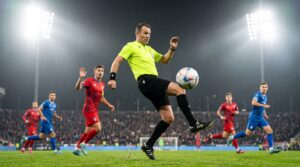
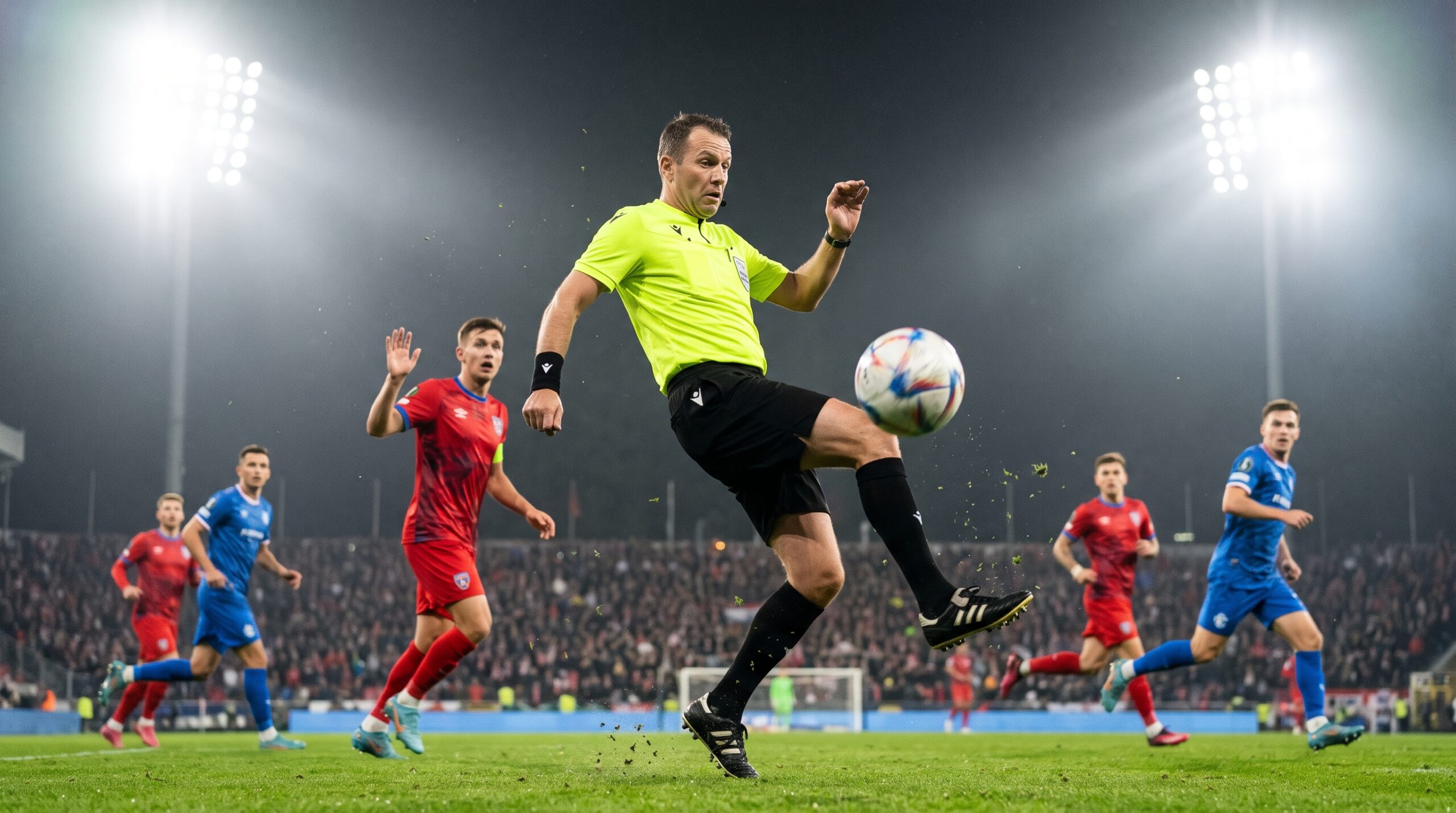
A pass clips the referee’s leg and rolls towards an attacker. The defenders stop and appeal. The goalkeeper has a decision to make, and everyone on the touchline seems to have a different answer.
If the referee touches the ball, play can continue. However, play stops for a dropped ball when the contact starts a promising attack, sends the ball directly into the goal, or changes which team has possession.
For a goalkeeper, knowing the rule helps during that uncertain moment between the deflection and the referee’s decision.
Referee Touches the Ball Soccer Rules Explained
Law 9 covers when the ball is in or out of play. After contact with a match official, the referee looks at what happened next.
| What happens after the ball hits an official? | What happens next? |
| The same team keeps possession without starting a promising attack | Play continues |
| Possession changes teams while the ball stays on the field | Play stops for a dropped ball |
| A team starts a promising attack because of the contact | Play stops for a dropped ball |
| The ball goes directly into the goal | The goal doesn’t count, and play restarts with a dropped ball |
| The ball goes over the touchline or goal line outside the goal | The usual boundary restart applies, based on the last player touch |
The same principles apply if the ball touches an assistant referee.
When Can Play Continue?
Imagine a defender passes across the back line. The ball brushes the referee and reaches another defender, who carries on without creating a promising attack. Play can continue.
That’s why shouting “It hit the ref!” doesn’t settle the decision. The referee needs to consider whether the contact changed possession, created an attack, or sent the ball directly into the goal.
Who Gets the Dropped Ball?
The restart depends on where the ball was and who would have possessed it without the interference.
Inside the Penalty Area
If the ball was inside the penalty area when play stopped, the referee drops it for the defending goalkeeper inside that area.
Outside the Penalty Area
The referee drops it for a player from the team that would have kept or gained possession without the interference, if that can be determined. If it’s unclear, the ball goes to the team that last touched it.
For contact with a match official outside the penalty area, the drop takes place where the ball hit the official.
When Play Starts Again
All other players must stay at least four metres away until the ball touches the ground. Once it does, the ball is in play.
A dropped ball is given to one player. There’s no need for two opponents to stand together and compete for it.
Three Match Situations That Explain the Rule
A Defender’s Pass Falls to an Opponent
A defender passes towards a teammate. The ball hits the referee and reaches an opposing striker.
Because possession has changed teams while the ball remains on the field, play stops for a dropped ball. The referee then applies the restart procedure described above.
The Same Team Gains an Attacking Chance
A midfielder’s pass hits the referee and falls to a teammate with space to drive towards goal.
Even though the same team has the ball, play stops if the deflection starts a promising attack. Keeping possession doesn’t automatically mean play continues.
A Shot Deflects Straight Into the Goal
A shot hits the referee and goes directly into the net.
The goal doesn’t count. The restart is a dropped ball, with the recipient and location determined under Law 8.
What Should a Goalkeeper Do After a Deflection?
An unexpected bounce can pull attention away from the next threat. While defenders appeal, an attacker may still be moving towards the ball.
A goalkeeper can focus on three things:
- Watch the ball. Stay aware of its new path while waiting for the referee’s decision.
- Keep communicating. Help defenders track runners and cover space while play remains active.
- Prepare for the restart. Once play stops, check who’ll receive the drop and where teammates can offer a passing option.
For training, a coach can add an unexpected deflection during a possession exercise. Sometimes allow play to continue and sometimes stop it for a restart. This gives goalkeepers practice reacting first, then organising what happens next.
Is It Different in the NFL?
In the NFL, a live ball normally stays live after hitting an official who is inbounds. What happens next depends on the type of play and where the contact occurs.
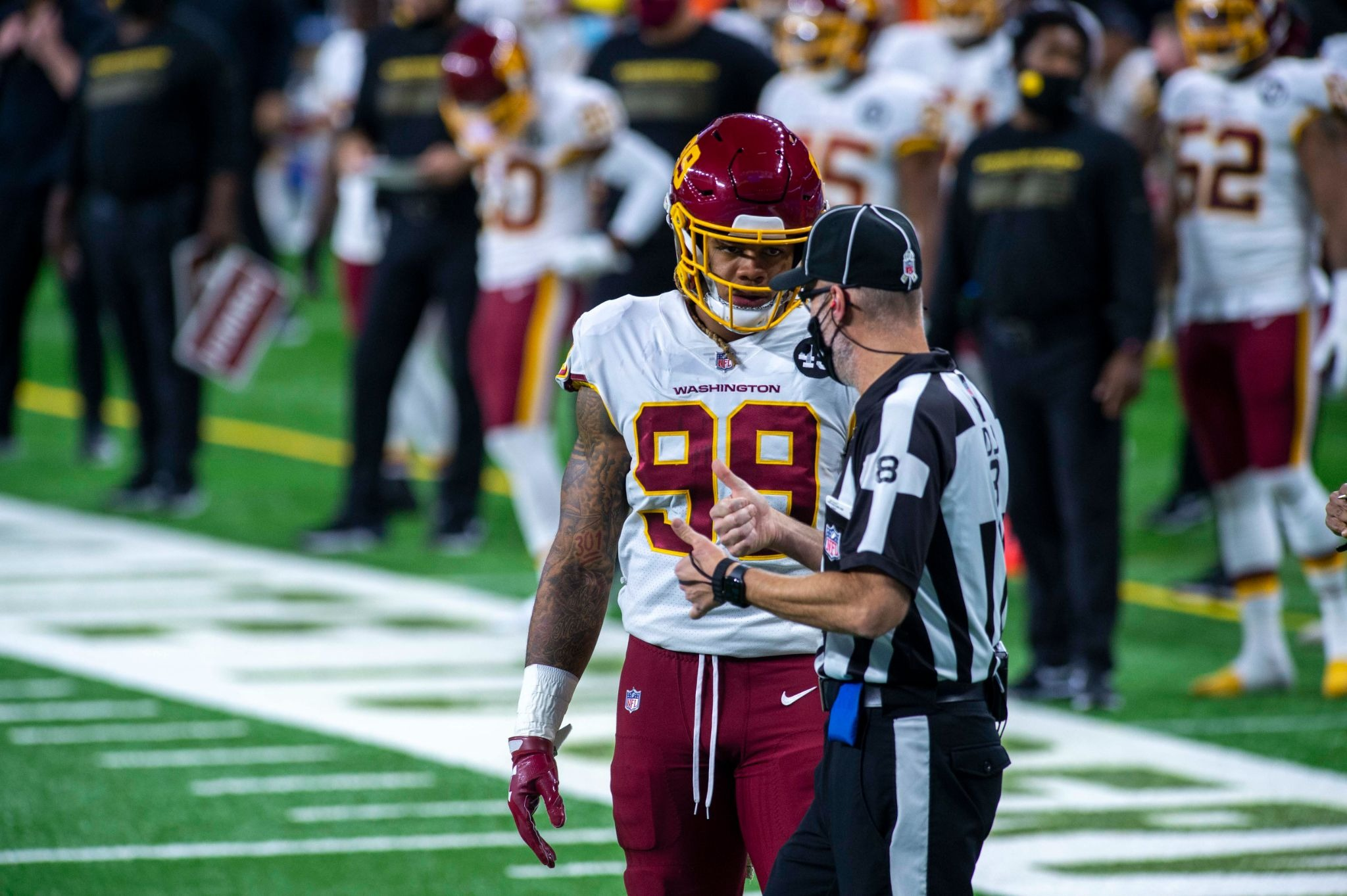
An NFL official during the Washington-Detroit game at Ford Field on November 15, 2020. Photo by All-Pro Reels via Wikimedia Commons, licensed under CC BY-SA 2.0.
| Situation | General NFL ruling |
| A forward pass hits an inbounds official | An eligible receiver can still catch it |
| The pass falls to the ground | It becomes an incomplete pass |
| A fumble hits an inbounds official | Players can still recover it |
| A kick hits an inbounds official | It remains a kick, with the normal kick rules applying |
| A loose ball touches an official who is out of bounds | The ball is out of bounds |
An official’s touch doesn’t make an ineligible lineman eligible to catch a pass. A ball in player possession follows separate boundary rules.
Accidental contact alone doesn’t give either team an automatic replay, possession award, or penalty. An erroneous whistle creates a separate dead ball situation, while contact with overhead stadium equipment falls under the video board and guide wire rule.
For this Football 101 comparison, the relevant provisions in the 2026 NFL Rulebook include Rule 7 Section 2 Article 2 and Rule 3 Section 20.
Frequently Asked Questions
Is it a goal if the ball hits the referee and goes in?
If the ball goes directly into the goal after hitting the referee, the goal doesn’t count. Play restarts with a dropped ball.
What is a dropped ball in soccer, and when is it used?
A dropped ball is a restart where the referee drops the ball for one player. It becomes playable when it touches the ground. It’s used for certain stoppages where another restart, such as a free kick or throw-in, isn’t required.
Can a referee’s touch stop a promising attack?
The contact can interrupt an attack, but that alone doesn’t automatically require a dropped ball. The specific Law 9 trigger is that the contact starts a promising attack. A change of possession or a direct goal also requires a stoppage.
Does the referee count as part of the field of play?
The ball can remain in play after touching the referee. However, the outcome of that contact matters. A promising attack, change of possession, or direct goal triggers a dropped-ball restart.
What happens if the ball hits the referee and then a team gains possession?
If the contact changes which team has possession while the ball stays on the field, play stops. Outside the penalty area, the referee considers who would have kept or gained possession without the interference when deciding who receives the drop.