
When the referee flashes red, play stops. If that card hits your number one, the whole vibe of the match shifts instantly. Benches jump up, players surround the official, and fans start working out the damage. Every side needs someone in goal, but it doesn’t have to be the guy who started there. You’re left wondering: Do we play short? Does the backup jump straight in? Who grabs the gloves if the bench is empty? Seeing a keeper get marched off always turns a normal Saturday afternoon completely upside down.
What Happens When a Goalkeeper Gets Sent Off?
When a goalie gets tossed during a match, things get chaotic fast under IFAB guidelines. The player has to clear the pitch and head straight down the tunnel.
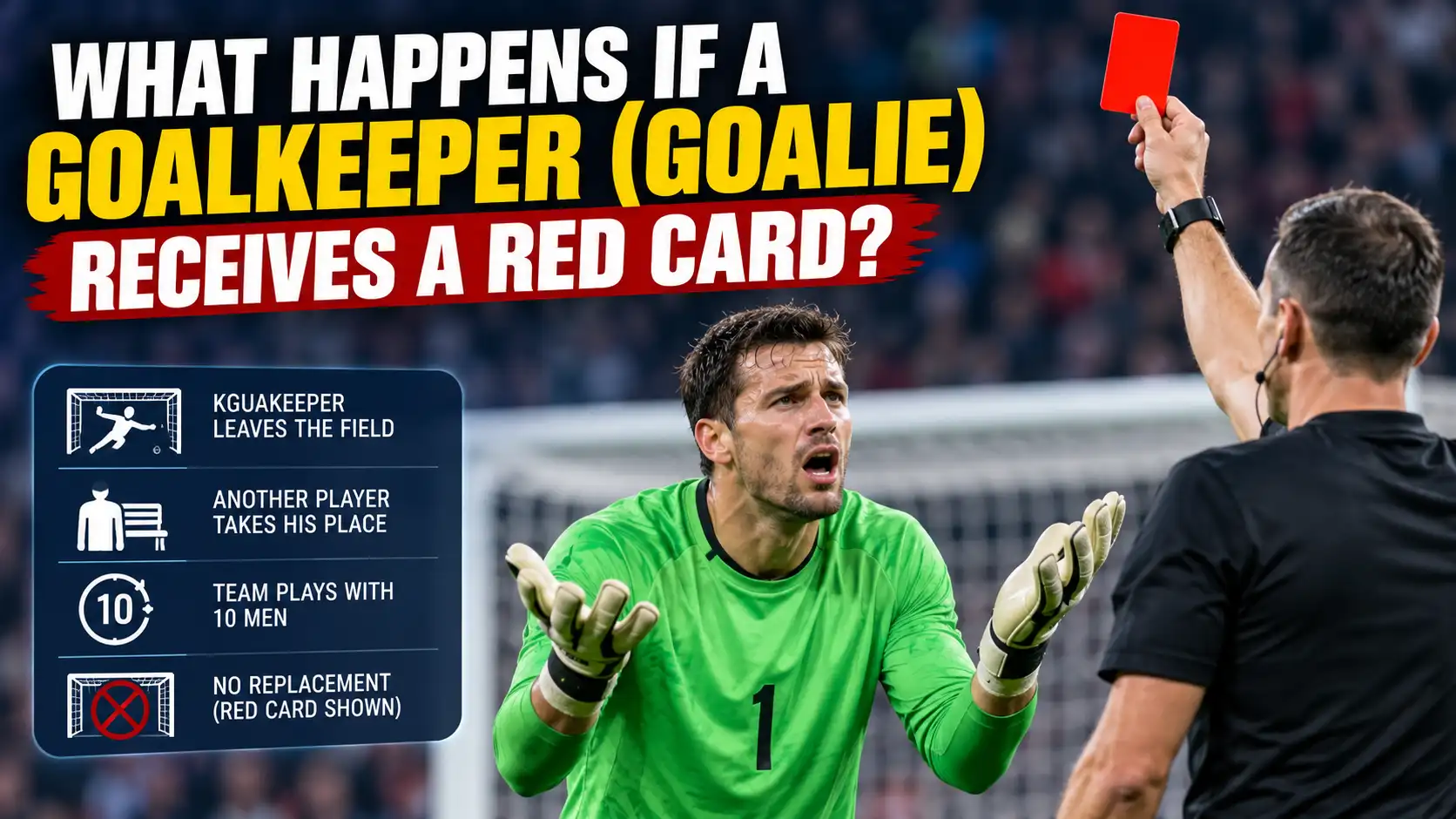
Looking at standard goalkeeper dismissal rules, a goalkeeper sent off scenario means the team always needs a designated player in goal wearing a distinct jersey. The goalkeeper red card Rules also determine how the team handles the replacement and continues the match. If the manager has a substitute goalkeeper ready, then one of the outfield players has to come off, just so there is room, and the team ends up with ten players. If there is no backup to hand, then a defender or a forward who is already on the pitch has to take over the goal. The Football Association (The FA) gives guidance on these things, while Law 12: Fouls and Misconduct covers the offences that can end up with a red card.
Why Can a Goalkeeper Receive a Red Card?
Can a goalkeeper get a red card for the same stuff outfield players do? Absolutely. Refs apply the book across the entire pitch, even if goalies deal with crazy traffic and physical contact inside their own box.
Keepers see red or pick up a second Yellow Card for things like:
- DOGSO (Denial of an Obvious Goal-Scoring Opportunity): Snuffs out a clear scoring chance outside the box or commits a DOGSO offense inside where there is no genuine attempt to play the ball.
- Serious Foul Play: Comes flying out for a loose ball with studs up and takes out an attacker.
- Violent Conduct: Throws a punch or shoves someone during a dead-ball scuffle.
- Deliberate Handball Outside the Box: Reaches out to stop a shot way outside the penalty area.
Clean handling keeps you out of trouble when crosses start raining down. Working on handling and positioning stops those messy spills that lead to reckless last-ditch tackles.
Who Replaces the Goalkeeper After a Red Card?
Finding a goalkeeper red card replacement depends entirely on what your manager has left on the bench. Deciding who replaces the goalkeeper after a red card comes down to a few basic paths.
If you still have changes left, the manager makes the obvious swap. An outfield player jogs off, the backup runs on, and you play out the rest of the game with ten men. Solid footwork and distribution help that new keeper settle right into the chaos.
If no backup goalie is available, an outfield teammate has to step up. That is one of the first things to understand about what happens if a goalkeeper gets a red card when no replacement keeper is available.
When all subs are gone, asking can a goalkeeper be replaced after a red card gets a blunt no. You’re stuck putting an outfield player in goal for the final stretch. Tournament rules can throw quirks into this, so it always pays to know your competition’s specific handbook.
How a Goalkeeper Red Card Changes the Match
A soccer goalkeeper red card forces an instant tactical shift. Losing a starting keeper usually makes a manager pull the squad back into a defensive shell.
Teams generally shift by:
- Setting a tight defensive line near the Penalty Area.
- Dropping the high press to protect space.
- Using short goal kicks because outfield players lack long distribution.
- Sitting deep to shield an untrained teammate in goal.
In big leagues like the Premier League or Major League Soccer (MLS), goalkeeper red card consequences force the entire team to retreat as defenders clear balls fast. Good communication keeps the group organized. Defenders make quicker decisions about crosses, through balls and when to step out with a makeshift keeper behind them.
What Happens If the Red Card Comes During a Penalty?
Giving up a penalty and a red card at the same time is every manager’s worst nightmare. Referees don’t automatically reach for red on every box foul; they look at the challenge first. If a keeper tries to play the ball fairly and just mistimes it, it’s usually just a yellow plus the penalty kick. But if there’s holding, pulling, or a cynical hack with zero intention of getting the ball, it’s a straight red.
Fouls outside the box bring a direct Free Kick. The replacement keeper faces huge pressure without any warm-up. Official disciplinary limits found in FIFA disciplinary codes show how bans carry over. Settling in fast is tough with little time to judge crosses or talk to defenders.
What About Extra Time and Penalty Shootouts?
Extra time in UEFA fixtures follows standard rules, but penalty shootouts run under strict protocols spelled out in IFAB Law 10.
If a goalie gets the red card during a shootout, they can only be replaced by an unused sub if the team hasn’t hit its match limit. Otherwise, an outfield player who finished the game has to pull on the jersey. To keep things fair under the reduce to equate rule, the opposing manager has to bench one of their own penalty takers so both sides match man-for-man.
Building mental toughness and confidence helps players handle these sudden shifts. Keeping a cool head matters more than rushing choices under intense pressure.
Surviving the Chaos When Your Keeper Gets Sent Off
Surviving the final stretch of a match, with a winger in goal, or even just watching your backup take a barrage after a red card… yeah, that’s basically pure survival mode. When a goalkeeper gets sent off, there isn’t really time to panic properly. The team has to lock in mentally, then adjust the back line, sort of recalibrate the whole shape, and figure out how to guard the goal with one less player on the pitch.
Knowing what happens if a goalkeeper gets a red card, makes the whole thing feel easier to track when it actually shows up in a match. Communication starts mattering more, and positioning gets pushed even higher in importance when an outfield player has to step into goal. If you learn how goalkeeper positioning works across different match situations, those mid-game adjustments can be a little more straightforward to understand.
Frequently Asked Questions
Can a goalie get sent off?
Yeah, the refs can show red to the keepers for the same kind of stuff that would get an outfield player sent away. Things like stopping a clear goalscoring chance, or doing a dangerous foul, you know the usual.
So what happens when the keeper gets dismissed?
He just jogs down the tunnel. After that, the team keeps going with ten men, and one of the players already on the pitch has to grab the jersey and the gloves, basically act as the stand-in.
Can a manager sub in a backup goalie?
Only if the side still has unused substitutions left. Once the backup keeper comes on, an outfield player has to be taken off so the numbers stay right.
Who plays in goal if there are no subs left?
Then an outfield teammate has to move between the posts and do the job for the rest of the match- no big change, just sudden goalkeeper duties.
Does the team stay down a player?
Yes. Even if a replacement goalkeeper is brought on, an outfield player still has to come off, so they’re left with ten men.
Can a dismissed keeper return later?
Nope. Once sent off, the player needs to leave the technical area completely, and he can’t take part in the match anymore.